

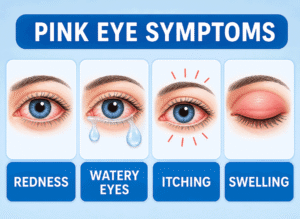
Pink eye symptoms can include redness, watering, itching, discharge, crusting, swelling, burning, or a gritty feeling in one or both eyes. At Barnet Dulaney Perkins Eye Center, patients across Phoenix, Mesa, Chandler, Glendale, Goodyear, Surprise, Tucson, Flagstaff, and throughout Arizona can get help determining whether eye redness is due to pink eye, allergies, dry eye, a corneal concern, or another condition that needs prompt care.
Most people use “pink eye” as a catch-all term for a red, irritated eye. Medically, pink eye usually refers to conjunctivitis, which is inflammation of the thin, clear tissue that covers the white part of the eye and lines the inside of the eyelids. Conjunctivitis can be viral, bacterial, or allergic. Some forms spread easily. Others are not contagious at all.
That distinction matters. Viral pink eye does not need antibiotics in most cases. Bacterial conjunctivitis may need prescription drops. Allergic conjunctivitis needs allergy-focused treatment. Dry eye, contact lens irritation, corneal injury, uveitis, or pressure-related eye problems may need a different plan entirely.
Pink Eye At A Glance
| Type | Contagious? | Common Clues | Typical Treatment Direction |
| Viral conjunctivitis | Yes | Watery discharge, redness, burning, cold-like symptoms | Supportive care, hygiene, and artificial tears |
| Bacterial conjunctivitis | Yes | Thick yellow or green discharge, crusting, and stuck eyelids | May need antibiotic drops |
| Allergic conjunctivitis | No | Itching, watering, both eyes, seasonal trigger | Allergy drops, cold compresses, trigger control |
| Dry eye or irritation | No | Burning, grittiness, fluctuating blur, dryness | Lubrication and dry eye evaluation |
| Corneal injury or infection | Sometimes | Pain, light sensitivity, contact lens issue, foreign body feeling | Prompt eye doctor evaluation |
This table can help you compare patterns, but symptoms often overlap. A red, watery eye may be viral pink eye, allergies, dry eye, or a corneal issue. An eye exam can help identify the actual cause.
Viral Pink Eye: Watery, Irritated, And Contagious
Viral conjunctivitis is one of the most common types of pink eye. It often causes redness, burning, watering, mild swelling, and a gritty feeling. It may begin in one eye and spread to the other. Some patients also have a sore throat, runny nose, cough, or recent cold symptoms.
Viral pink eye is contagious. It can spread through hand-to-eye contact, shared towels, contaminated surfaces, makeup, pillowcases, or close contact with someone who is sick.
Antibiotic drops usually do not help viral pink eye because antibiotics do not treat viruses. Supportive care may include preservative-free artificial tears, cool compresses, careful handwashing, and avoiding contact lenses until symptoms fully clear and your eye doctor says it is safe.
If redness is accompanied by significant pain, light sensitivity, blurred vision, or worsening symptoms, it may be more than routine viral conjunctivitis.
Bacterial Pink Eye: Thick Discharge And Crusting
Bacterial conjunctivitis can cause redness, irritation, eyelid swelling, and thicker discharge. Many patients notice yellow, green, or mucus-like drainage. The eyelids may feel stuck together after sleep.
Bacterial pink eye is also contagious. It can spread through direct contact with infected fluid, contaminated hands, shared personal items, or eye makeup. Children may get bacterial pink eye more often than adults, though adults can get it too.
Treatment depends on severity, symptoms, age, risk factors, and exam findings. Some cases improve on their own. Others may need antibiotic eye drops or ointment. If you wear contact lenses, have eye pain, notice vision changes, or have heavy discharge, schedule care promptly.
Avoid using someone else’s prescription drops. The wrong medication can irritate the eye or delay the right diagnosis.
Allergic Conjunctivitis: Itchy, Watery, And Not Contagious
Allergic conjunctivitis can look like pink eye, but it is not contagious. It happens when allergens such as pollen, dust, mold, pet dander, smoke, or outdoor irritants trigger inflammation.
The biggest clue is itching. Allergy-related eye redness usually affects both eyes and often comes with watering, swelling, sneezing, or seasonal symptoms. In Arizona, windy days, dust, desert plants, and seasonal pollen can make eye allergies flare quickly.
If itching and watering are your main symptoms, BDP’s guide to ocular allergies and itchy eyes may help you understand the pattern. Allergy eye drops, cool compresses, artificial tears, and trigger control can help some patients. However, persistent symptoms should still be checked, especially if redness does not match your usual allergy pattern.
When Pink Eye Is Actually Dry Eye
Dry eye can mimic pink eye because it can cause redness, burning, watering, foreign body sensation, and fluctuating vision. Instead of feeling infected, the eye may feel scratchy, tired, sandy, or irritated.
Arizona’s dry climate can make this worse. Wind, air conditioning, screen use, contact lenses, certain medications, and tear film problems may all contribute. Some patients overuse redness-relief drops, which can create rebound redness or irritation.
If your redness keeps coming back, especially with burning or grittiness, the issue may be chronic surface irritation rather than contagious pink eye. BDP offers dry eye treatment in Arizona, along with related resources like home remedies for dry eyes and eye drop overuse, which can support next steps.
Pink Eye Or A Corneal Problem?
A corneal problem may also cause redness, watering, discharge, and irritation. The cornea is the clear front surface of the eye. A scratch, infection, foreign body, contact lens complication, or inflammation can cause the eye to be red and painful.
Watch closely for sharp pain, light sensitivity, blurred vision, a foreign-body sensation, or redness after sleeping in contact lenses. These symptoms deserve prompt evaluation. Contact lens wearers should remove their lenses and avoid wearing them again until an eye doctor says it is safe to do so.
Corneal conditions can cause redness, foreign body sensation, blurriness, and irritation. For patients trying to sort out sharp discomfort, “ What’s the Sharp Pain in My Eye? is a helpful related resource.
Prevention: How To Avoid Spreading Pink Eye

Wash your hands often. Avoid touching or rubbing your eyes. Do not share towels, pillowcases, washcloths, eye drops, contact lens cases, or makeup. Replace eye makeup that may be contaminated. Clean glasses frequently. Stay out of contact lenses until symptoms clear and your eye doctor gives guidance.
Parents should also check school or daycare policies, since return rules can vary. In many cases, the key issue is whether the child has fever, heavy discharge, worsening symptoms, or trouble avoiding close contact.
When Redness Needs An Eye Doctor
Schedule an eye exam if pink eye symptoms are severe, unusual, or not improving. Redness should be checked promptly if you have:
- Eye pain
- Blurry vision
- Light sensitivity
- Heavy mucus or discharge
- Symptoms that get worse after a few days
- Redness after a scratched eye
- Contact lens-related redness
- A weakened immune system
- A newborn with eye redness or discharge
- A red eye after eye surgery or an eye procedure
Light sensitivity can point to several eye conditions, including conjunctivitis, dry eye, corneal abrasion, keratitis, or uveitis. If that symptom stands out, BDP’s guide to photophobia and light sensitivity can help connect the dots, but an exam is still the safest next step.
Get Help For Pink Eye Symptoms In Arizona
Pink eye symptoms can be frustrating, contagious, uncomfortable, and easy to misread. The right treatment depends on the cause. Viral, bacterial, allergic, dry eye-related, and corneal causes can all look similar at first, but they require different care.
Barnet Dulaney Perkins Eye Center provides comprehensive eye exams and specialty eye care at locations across Arizona. If you are unsure whether you need a routine exam or more urgent care, the team can help direct you based on your symptoms, vision needs, and eye health history.
If your eye is red, painful, light sensitive, or affecting your vision, do not wait. Schedule an eye exam online or seek emergency care for severe symptoms.