

The causes and treatments for chronic dry eye can feel confusing when your eyes burn, water, or blur even after you use lubricating drops. Dry eye may develop because your eyes do not make enough tears. It can also occur when the tear film does not stay stable enough to protect the eye’s surface. The right treatment depends on which part of that system has stopped working well.
Arizona’s dry air, wind, heat, and constant air conditioning can make symptoms more noticeable, but climate is rarely the whole story. Barnet Dulaney Perkins Eye Center provides dry eye treatment in Arizona, evaluating tear production, tear quality, eyelid health, inflammation, and other factors before recommending a treatment plan.
What Chronic Dry Eye Means
Every blink spreads a thin tear film across the front of the eye. This film contains watery fluid for moisture, oil that slows evaporation, and mucus that helps tears spread evenly. It supports comfort, protects the cornea, and creates a smooth surface for clear vision.
Chronic dry eye, also called dry eye disease, occurs when the tear film repeatedly fails to keep the eye’s surface adequately lubricated. Some people make too little of the watery portion of tears. Others have blocked or unhealthy meibomian glands, so tears evaporate too quickly. Many patients have a combination of both.
The National Eye Institute explains that dry eye can occur when the eyes do not produce enough tears or when tears do not function properly. This is why repeatedly adding moisture may ease symptoms without fully addressing the cause.
Symptoms Can Affect Comfort and Vision

- Burning, stinging, or a gritty sensation
- Redness or irritation
- Watery eyes
- Stringy mucus around the eyes
- Light sensitivity
- Tired or heavy-feeling eyes
- Contact lens discomfort
- Blurry or fluctuating vision
- Vision that briefly clears after blinking
- Symptoms that worsen late in the day, outdoors, or during screen use
Watery eyes can still be dry. Irritation may trigger reflex tearing, but those tears may not contain the balanced oil, water, and mucus needed for lasting comfort.
If glare or bright light has become uncomfortable, the Barnet Dulaney Perkins Eye Center guide to photophobia and light sensitivity explains other possible causes that may need evaluation.
The Main Chronic Dry Eye Causes
The most useful way to understand the causes and treatments of chronic dry eye is to connect each tear-film problem to the care it may require.
| Dry Eye Pattern | What Happens | Common Contributors |
|---|---|---|
| Evaporative dry eye | Tears break apart or evaporate too quickly because the protective oil layer is weak. | Meibomian gland dysfunction, blepharitis, rosacea, incomplete blinking, screens, wind, low humidity, and contact lens wear |
| Aqueous-deficient dry eye | The lacrimal glands do not make enough of the watery layer of tears. | Aging, Sjögren’s syndrome, certain medications, nerve changes, inflammation, and some medical conditions |
| Mixed dry eye | Low tear production and excessive evaporation occur together. | Overlapping gland dysfunction, inflammation, medication effects, environment, surgery, or systemic disease |
Meibomian Gland Dysfunction and Eyelid Inflammation
Meibomian glands along the eyelid margins release oil that slows tear evaporation. When these glands become blocked or their oil thickens, the tear film can break apart too quickly. Blepharitis, rosacea, and Demodex mites may also cause eyelid inflammation and disrupt gland function.
Aging, Hormonal Changes, and Medical Conditions
Tear production and oil-gland function can change with age. Hormonal changes, especially around menopause, may also affect the tear film.
Autoimmune diseases such as Sjögren’s syndrome and rheumatoid arthritis can reduce tear production or increase ocular-surface inflammation. Thyroid disease, diabetes, rosacea, and other health conditions may contribute in some patients.
The Barnet Dulaney Perkins Eye Center’s overview of aqueous-deficient dry eye examines low tear production and its potential connection to autoimmune disease in more detail.
Medications and Eye Drops
Antihistamines, decongestants, some antidepressants, isotretinoin, certain blood pressure medications, and other medicines may reduce tear production or change the tear film. Preserved eye drops can also irritate the ocular surface when used frequently.
Do not stop a prescription because your eyes feel dry. Bring a complete list of medications and supplements to your appointment. Your eye doctor can identify potential contributors and coordinate with the prescribing clinician when needed.
Screens, Contact Lenses, and the Arizona Environment

If symptoms build throughout the workday, review these strategies for digital eye strain and screen-related dry eye. Dryness that is strongest after waking may have a different pattern, including overnight exposure or airflow, which the guide to dry eyes at night explores.
Eye Surgery and Ocular-Surface Changes
Dry eye symptoms can develop or become more noticeable after LASIK, cataract surgery, or another eye procedure. Temporary inflammation, changes in corneal sensation, postoperative drops, and pre-existing tear-film instability may all contribute.
Learn more about dry eye after cataract surgery or after LASIK if your symptoms began around the time of a procedure. Contact your surgical team first when symptoms occur during postoperative recovery.
How Eye Doctors Diagnose the Cause
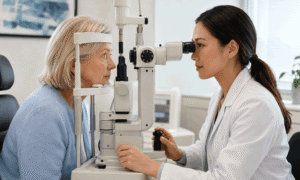
The examination may include:
- A slit-lamp evaluation of the tear film, cornea, conjunctiva, and eyelids
- Ocular-surface staining to identify dry or damaged areas
- Tear breakup time to measure tear-film stability
- A Schirmer test or another method of assessing tear volume
- Evaluation of the meibomian glands and the oil they produce
- Meibography to view the gland structure when appropriate
- Tear osmolarity or inflammation testing in selected cases
- Assessment of blink quality, eyelid closure, and corneal sensation
No single test tells the entire story. The National Eye Institute’s dry eye testing guide describes how slit-lamp examination, Schirmer testing, and tear breakup time can help doctors evaluate tear quantity and stability. Your doctor combines those findings with your symptoms and eye health.
Treatment Should Match the Dry Eye Pattern
Dry eye treatment often works in layers. A patient may need daily habits to control symptoms, medication to reduce inflammation, and an in-office treatment for blocked glands. Improvement may take time, and the plan may change as the ocular surface responds.
Lubrication and Daily Ocular-Surface Care
Artificial tears, gels, or ointments can supplement the tear film. Preservative-free products may be preferable for frequent use, but the best formulation depends on whether the tear film lacks water, oil, or both.
Redness-relief drops are not the same as lubricating tears and can worsen redness when overused.
Warm compresses and eyelid hygiene may help some patients with meibomian gland dysfunction or blepharitis. Your eye doctor can explain the appropriate temperature, duration, and cleaning method. An eye that was operated on recently may require different instructions, so follow the surgical team’s guidance during recovery.
For practical self-care that supports, but does not replace, an examination, review these home remedies for dry eyes.
Prescription Treatment for Inflammation and Tear Support
Prescription eye drops may reduce ocular-surface inflammation or support natural tear production. Options can include cyclosporine or lifitegrast, depending on the diagnosis and the patient.
A clinician may prescribe a short course of a corticosteroid drop for a flare. Steroid eye drops require medical supervision because prolonged or inappropriate use can raise eye pressure and cause other complications.
Some people with severe ocular-surface disease may benefit from serum-based tears. These custom drops use components from the patient’s blood and require specific preparation, storage, and dosing instructions.
Treatment for Blocked Meibomian Glands
When meibomian gland dysfunction drives evaporation, treatment may focus on restoring healthier oil flow. Barnet Dulaney Perkins Eye Center lists several available options, including:
- Intense pulsed light, or IPL, for appropriately selected patients
- Radiofrequency treatment
- Thermal pulsation or heat-and-expression systems
- In-office meibomian gland expression
- Eyelid hygiene, debridement, or targeted Demodex care
These treatments are not interchangeable. Candidacy, treatment frequency, expected improvement, maintenance, contraindications, and out-of-pocket costs can vary. An evaluation helps determine whether gland-directed therapy is appropriate for your plan.
Conserving Tears and Protecting the Cornea
Punctal plugs reduce tear drainage, so tears remain on the eye longer. They may help patients with low tear volume, but doctors often assess ocular-surface inflammation before recommending them.
Punctal cautery permanently closes a drainage opening and is reserved for selected cases when longer-lasting tear conservation is appropriate.
Specialty scleral lenses can create a fluid reservoir over the cornea for some patients with advanced dry eye or surface damage. Other options, such as amniotic membrane therapy, may support healing in selected cases. These treatments require individualized evaluation and follow-up.
Habits That Can Reduce Daily Triggers
Self-care cannot prevent every form of dry eye, but it can reduce avoidable triggers and support medical treatment:
- Blink fully and take regular breaks during sustained screen work.
- Keep fans, vents, and vehicle air conditioning from blowing directly toward your eyes.
- Use a humidifier when indoor air feels dry.
- Wear wraparound sunglasses in wind, dust, or intense Arizona sun.
- Follow contact lens wear, cleaning, and replacement instructions.
- Avoid smoke and rinse irritating cosmetics or skin products away from the eyelid margin.
- Use only the eye drops recommended for your symptoms.
- Stay consistent with the treatment plan and follow-up schedule your doctor provides.
Omega-3 supplements are sometimes promoted for dry eye, but evidence has not shown a universal benefit. National Eye Institute-funded research found that omega-3 supplements were no better than a placebo for relieving dry eye signs or symptoms in a large controlled trial.
Ask your clinician before adding supplements, especially if you take medications or have other health conditions.
Symptoms That Need Prompt Evaluation
Persistent burning, grittiness, watering, or fluctuating blur deserves an eye examination, especially when symptoms interfere with reading, driving, work, sleep, or contact lens wear.
Do not assume sudden or severe symptoms are dry eye. Seek prompt eye care for severe eye pain, sudden vision loss, rapidly worsening redness, marked light sensitivity, thick discharge, an eye injury, or a chemical exposure.
New flashes, floaters, or a curtain-like shadow also require prompt attention. Barnet Dulaney Perkins Eye Center’s emergency eye care guidance explains how to respond to urgent eye symptoms.
Find the Cause of Chronic Dry Eye in Arizona
Chronic dry eye can change from day to day, but recurring symptoms should not become your norm. A focused evaluation can show whether low tear production, excessive evaporation, eyelid inflammation, medication effects, or another eye condition is disrupting your tear film.
Barnet Dulaney Perkins Eye Center offers dry eye evaluation and treatment at locations across Arizona. If irritation, watering, light sensitivity, or fluctuating vision keep returning, schedule an eye exam online to receive a personalized diagnosis and treatment plan.