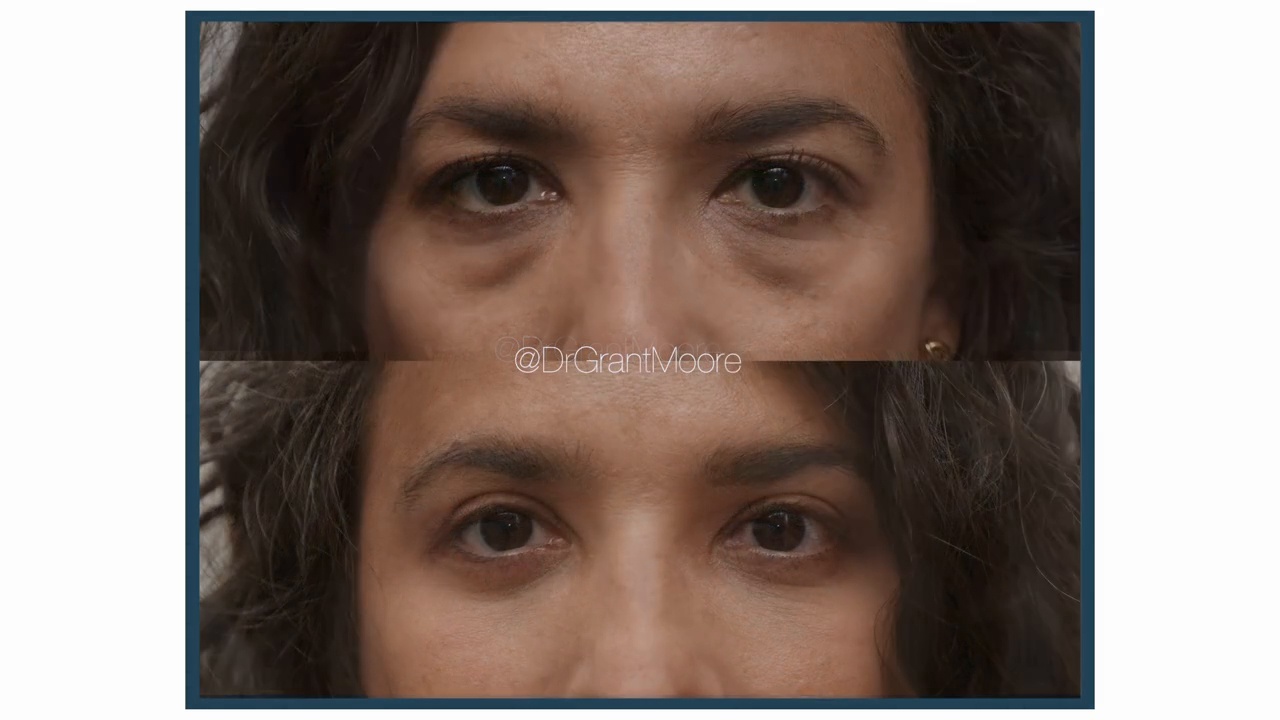
A lower blepharoplasty, or lower eyelid surgery, is a cosmetic under-eye surgery that improves the appearance of the lower eyelids and the surrounding area.
Lower blepharoplasty, also known as lower eyelid surgery, is designed to restore a smoother, more youthful appearance to the lower eyelids by addressing excess fat, loose skin, and age-related changes around the eyes. At Barnet Dulaney Perkins Eye Center, Dr. Grant Moore, a fellowship-trained ophthalmic plastic surgeon, specializes in procedures that rejuvenate the eyes while preserving their natural expression and function.
Whether your under-eye bags are caused by aging or genetics, lower blepharoplasty can help you achieve a brighter, rested appearance with results that still look like you.
What Happens During Lower Blepharoplasty?
Lower blepharoplasty is typically performed as an outpatient procedure.
Depending on your needs, surgery may involve:
A hidden incision inside the lower eyelid (transconjunctival approach)
A small incision just below the lash line is made when skin removal is needed
Fat repositioning
Removal of excess fat
Removal of excess skin
Tightening of supporting tissues when appropriate
The procedure generally takes about 60 to 90 minutes, although treatment time may vary depending on the complexity of your surgery.
Reduction of wrinkles, puffiness, and excess skin.
2
Refreshed & Alert Appearance
Eyes look brighter, shapelier, and less tired.
3
Improved Facial Balance
Enhances harmony across the entire face.
4
Clearer Vision
Removing excess skin and fat can improve peripheral vision previously blocked by sagging tissue.
5
Reduced Eye Strain & Headaches
Lifting heavy or drooping eyelids relieves pressure on the eye muscles, which can also reduce tension and headaches caused by excess skin.
I had upper and lower blepharoplasty with Dr Moore. I couldn’t be happier with the entire experience from consult to recovery. From the minute that I walked into the clinic, I was treated with professionalism, warmth, and respect. Dr. Moore was thorough during the consultation, explaining the procedure in detail and setting realistic expectations. My procedure went smoothly, and recovery was as described. I am very happy with how natural my results look; refreshed, subtle, not overdone. Dr. Moore and his team’s post-op care was just as impressive. I felt supported throughout the healing process.
Jan
Google
Dr. Moore and his whole staff made me feel comfortable and relaxed before surgery. I was impressed by his staff’s level of organization. Dr. Moore called me after surgery, and this made me feel cared for! I am so happy with the results of my lower eyelid blepharoplasty. This surgery gave me more confidence, and I finally feel comfortable taking my glasses off now. Thanks for making me feel special! Dr. Moore and his team are the best, but I can’t recommend them enough.
Edna H.
WOW I have eyelids. I had my eyelids done, and also the fat removed from under my eyes. I am thrilled with the results. Both Dr Moore and his staff were wonderful. When deciding to do the surgery one of the things that impressed me was that his staff and he were friends outside of the office as well. Enjoying working with each other is important at least to me. Dr Moore called me after my surgery to check on me. I was so impressed with everything that I asked him when and if he started doing faceless put me on his list. I would definitely recommend Dr Moore. I’m so glad that I did it. Anyone who’s been thinking of it Dr Moore is your Dr. I think you’ll be amazed at the wonderful outcome.
Holly N.
Google
Request a Lower Eyelid Blepharoplasty Consultation
Your consultation begins with a conversation about what you have noticed and what you hope to improve. Your surgeon will ask about your medical history, eye health, previous procedures, medications, and any symptoms affecting your vision or comfort.
The techniques used in lower blepharoplasty can vary based on your individual needs, your overall eye health, and the extent of correction required. Surgeons may also have their own preferred approaches. During your consultation, your provider will explain which technique is best suited for you and what you can expect during the procedure. Despite these variations, there are a few constants: you’ll receive either local anesthesia with sedation or general anesthesia, and the procedure typically involves small, hidden incisions inside the lower eyelid to minimize visible scarring. From there, the surgeon may reposition or remove fat, remove loose skin, or perform a combination of both before closing the incisions with sutures.
What causes bags, sagging skin, and dark circles under the eyes?
The lower-eyelid blepharoplasty surgery targets the appearance of under-eye bags, dark circles, and skin redundancies. But what causes these conditions? Several factors can contribute to bags, dark circles, and sagging skin under the eye:
1. Age
As we age, our skin loses its elasticity, and the tissues and muscles that support the eyelids begin to weaken. As a result, the muscles around the eyes can start to droop, and the skin can begin to sag. This can also cause the fat around the eyes to shift and move downward to the area below the eyes, which contributes to the puffiness that appears as under-eye bags.
2. Genetics
Family history can also be a contributing factor. Some people are predisposed to darker pigmentation under their eyes, which can result in dark circles. A genetic predisposition to fluid retention can also cause under-eye bags and puffiness.
3. Fluid Retention
When not caused by genetics, fluid retention can occur situationally — for example, after consuming a salty meal or upon waking.
4. Medical conditions
Several medical conditions can cause or contribute to under-eye issues. For example, under-eye bags can be caused by the inflammation that accompanies typical food and seasonal allergies, which can also cause the blood vessels around the eyes to dilate, leading to darker-looking skin. More serious conditions, such as dermatitis, dermatomyositis, thyroid problems, and kidney disease, can also be to blame.
5. Lifestyle factors
Several lifestyle choices can contribute to or worsen the appearance of bags, loose or excess skin, and dark circles. Smoking, prolonged exposure to sunlight, and excessive screen time can also contribute.
Post-Surgical Care Needs and Recovery
Compared to many other cosmetic procedures, the recovery period and care needs following a lower blepharoplasty are minimal and not long-lasting. Immediately following the operation, you’ll be taken to a recovery room, where your care team will monitor your vital signs and begin pain management, which will be most intense on the day of your surgery. That said, a lower blepharoplasty is among the least painful cosmetic procedures you can have. Still, expect to be sent home with a prescription for medication to help you manage any discomfort.
In addition to some mild discomfort following the procedure, you should expect to experience some swelling and bruising around the eyes. These are entirely normal and are not a cause for concern, although they may increase your level of discomfort. In most cases, swelling and bruising will peak a few days after your surgery and should subside within one to two weeks. Until they do, your doctor will suggest:
Prescription eye drops to prevent dryness and minimize the risk of infection.
Prescription eye ointments to keep the incisions and sutures clean
Cold compresses to help reduce swelling and post-surgical pain
You’ll also receive instructions for caring for yourself after the procedure. Again, these instructions are likely to vary from patient to patient. In most cases, your doctor will advise you to get plenty of rest, keep your head elevated, and avoid strenuous activities, particularly those involving heavy lifting. It’s also important to keep your eyes shielded from direct sunlight, so be sure to have sunglasses and a brimmed hat on hand.
Most patients can resume normal activities in about two weeks, depending on the doctor’s recommendations. In rarer situations, it can take up to six weeks before you can resume your routine. Finally, your doctor will schedule a few follow-up appointments to ensure that no complications arise and to monitor your progress.
Lower-eyelid Blepharoplasty Candidacy
Because sagging skin, dark circles, and under-eye bags are usually age-related, the best candidates for a lower blepharoplasty are people 30 years of age and above. Your health history can also determine whether a lower blepharoplasty is right for you. Good overall health is an important factor. People with certain medical conditions, including diabetes, heart disease, and high blood pressure, may be discouraged from undergoing eye-bag surgery and lower-eyelid operations.
Eye health is another crucial determinant. Good candidates for a lower blepharoplasty are people without pre-existing eye conditions unrelated to the focus of the procedure, including:
Glaucoma
Dry eyes
Detached retinas
Thyroid disorders like Graves’ disease, hypothyroidism, and hyperthyroidism
Your doctor will administer a physical examination to determine whether a lower blepharoplasty is right for you. They’ll check your visual acuity and examine the pupils. They’ll also check the strength and rate of your blink and evaluate the condition of the layer of oil, mucin, and water that covers your eyes. In most cases, doctors will check for signs of Bell’s phenomenon, a condition that causes the eyes to move outward and upward when you attempt to close them. Other exam focuses include:
Eyelid laxity
Infraorbital hollowing
Malar fat atrophy
Globe prominence
Skin evaluations to rule out Fitzpatrick skin type, lesions, and dyschromia
Canthal tendon dehiscence
If you’re considering a lower blepharoplasty, it’s crucial to discuss your health history with your cosmetic surgeon. You should also consult with your primary care physician beforehand.
The Benefits of Lower-Eyelid Blepharoplasty?
The benefits of a lower blepharoplasty are numerous and, in most cases, can be long-lasting. Under-eye surgery reduces the appearance of eye bags, wrinkles, excess skin, and other signs of aging, resulting in a more youthful-looking appearance. As such, among the most desirable benefits is the boost in confidence in the appearance of your eyes and improved overall self-esteem.
Other benefits include:
Smoother, more youthful-looking eyes
Eyes that appear refreshed, shapely, and alert
Enhanced facial balance
The potential benefits of a lower-eyelid blepharoplasty are not exclusively cosmetic. Aside from improving the appearance of your eyes, an eyelid lift surgery can enhance their function and help you see more clearly. This is because the procedure removes excess skin and fat that could be blocking the eye and impacting vision. Moreover, eye-bag surgery can lessen the strain that the excess skin puts on your eyes and alleviate related headaches.
How Long Do Lower Blepharoplasty Results Last?
Once the swelling and bruising subside, you can expect the most noticeable results of a lower blepharoplasty to become apparent within a few months or less. While everyone’s situation is unique, the improved eye and facial appearance can last for many years, or even for the rest of your life. If your procedure focuses on removing excess fat (as opposed to methods that focus on removing excess skin around the eyes), the results tend to be more lasting.
Possible Surgical Risks and Complications
As with any surgical procedure, a lower blepharoplasty carries the risk of postoperative complications. Eye infections are a possibility, so following your doctor’s recovery instructions and taking any prescribed medications is crucial to minimize that risk.
Other potential complications of the procedure include:
Retrobulbar hemorrhage: This complication is rare but can be quite severe. It refers to the accumulation of blood behind the eyes, which can cause compression of the optic nerve and a condition known as proptosis, characterized by bulging eyes.
Pyogenic granuloma: These are lesions, or clusters of tissue and white blood cells, that grow on the conjunctiva (the membrane that covers the eye and interior of the eyelids) and on the cornea. They are not cancerous and can be treated with steroids, though some may be surgically removed.
Chemosis: This condition is characterized by swollen tissue. It can make it difficult to close the affected eye completely. The inability to completely close your eyes is known as lagophthalmos.
Diplopia: In rare cases, a lower blepharoplasty can injure the inferior oblique muscle. The result is a lag in movement between the inferior oblique and the yoke muscle with which it’s paired. This causes diplopia or double vision.
Suture cysts: Also known as Schloffer tumors, occur when the body’s immune system attempts to separate eyelid tissue from sutures by surrounding them with clusters of cells.
Hypertrophic scars: These are thick, red, raised scars that resemble keloids. They’re an immune system response to an overabundance of collagen and connective tissue.
Eyelid retraction: In situations where excessive skin tissue is removed or the surgical wound fails to heal correctly, the lower eyelid may sag, leaving a larger area of the eye exposed.
Ectropion: Although it’s generally not serious, this condition causes the lower eyelid to droop away from the eye.
Realistic Results: Is Lower Blepharoplasty Worth It?
When assessing whether undergoing a lower blepharoplasty is worthwhile, the most important thing is to ensure that your expectations for the procedure are realistic. A blepharoplasty has the potential to improve the appearance of your eyes and the constitution of your whole face. However, anyone expecting the procedure to result in a drastic transformation is likely to be disappointed. A blepharoplasty can tighten the skin around the eyes and reduce discoloration and puffiness, but there are features that it won’t address.
For example, you shouldn’t expect a blepharoplasty to correct the natural asymmetry of the eyes. This commonly occurs when your eyes are in the developmental stages. As such, misalignments between the shape and size of your eyes won’t go away after a blepharoplasty, nor will the procedure result in large-scale changes to the overall structure of your face. During your consultations, be sure to discuss your expectations for the procedure with your doctor. They can explain the results that you’re likely to experience and help keep your expectations in line with realistic outcomes.
That said, if your expectations are realistic, a blepharoplasty may be entirely worthwhile. The face we present to the world is essential to most people, and feeling that you look your best can have a profound impact on not only how others perceive you, but also how you perceive yourself.
Cosmetic Eyelid and Facial Plastic Surgery Services
On average, a lower blepharoplasty costs between $6,000 and $10,000. This includes not only the price of the procedure itself but also other fees, such as anesthesia and facility fees. The experience level and expertise of the plastic surgeon, as well as the geographic location and surgical setting, such as whether the procedure is performed at a private clinic or in a hospital, can all affect the overall cost.
A lower blepharoplasty is one of the least painful cosmetic procedures available. Patients can expect to experience some pain and discomfort immediately following the operation, especially on the day of the procedure, as well as further discomfort from swelling and bruising during recovery. However, this discomfort should generally subside within two weeks or so.
A lower blepharoplasty generally takes around 90 minutes, not including time spent in the recovery room. Depending on the extent of the procedure, it can last up to two-and-a-half hours.
The longevity of the results of a lower blepharoplasty can last for many years. For some patients, the results can last for the rest of their lifetime.
The best candidates for a lower blepharoplasty are typically in their 30s or older.
The best candidates for a lower blepharoplasty are those who are in good physical health and do not have pre-existing eye conditions such as glaucoma, thyroid conditions, or excessively dry eyes. People with cardiovascular issues, high blood pressure, and diabetes should consult their medical provider and their cosmetic surgeon before undergoing a blepharoplasty.
To provide the best experiences, we use technologies like cookies to store and/or access device information. Consenting to these technologies will allow us to process data such as browsing behavior or unique IDs on this site. Not consenting or withdrawing consent, may adversely affect certain features and functions.
Functional
Always active
The technical storage or access is strictly necessary for the legitimate purpose of enabling the use of a specific service explicitly requested by the subscriber or user, or for the sole purpose of carrying out the transmission of a communication over an electronic communications network.
Preferences
The technical storage or access is necessary for the legitimate purpose of storing preferences that are not requested by the subscriber or user.
Statistics
The technical storage or access that is used exclusively for statistical purposes.The technical storage or access that is used exclusively for anonymous statistical purposes. Without a subpoena, voluntary compliance on the part of your Internet Service Provider, or additional records from a third party, information stored or retrieved for this purpose alone cannot usually be used to identify you.
Marketing
The technical storage or access is required to create user profiles to send advertising, or to track the user on a website or across several websites for similar marketing purposes.