

Uveitis treatment depends on which part of the eye is inflamed, what caused the inflammation, and whether one or both eyes are affected. A painful red eye, new floaters, light sensitivity, or blurry vision may look like a minor irritation at first, but uveitis involves inflammation inside the eye and requires a timely medical evaluation.
For patients across Phoenix, Mesa, Scottsdale, Tucson, Flagstaff, Lake Havasu City, and other Arizona communities, Barnet Dulaney Perkins Eye Center can evaluate concerning symptoms, examine the structures inside the eye, and guide patients toward the appropriate level of specialty care.
What Is Uveitis?
Uveitis is a broad term for inflammation inside the eye. It often affects the uvea, the middle layer of tissue that includes the iris, ciliary body, and choroid. Inflammation may also involve nearby structures, including the vitreous, retina, and optic nerve.
Uveitis is not one specific disease. It can develop as an isolated eye problem or as part of an infection, autoimmune condition, inflammatory disorder, injury, medication reaction, or another medical issue. In some cases, doctors cannot identify a clear cause.
The American Academy of Ophthalmology classifies uveitis by the area where inflammation is concentrated. Acute anterior uveitis, which primarily affects the front of the eye, is the most common form.
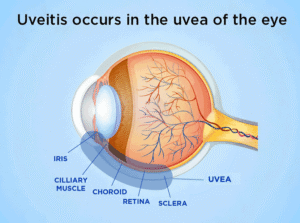
Types of Uveitis
| Type | Area primarily affected | Symptoms that may occur |
| Anterior uveitis | Iris and the front of the eye | Eye pain, redness, light sensitivity, blurry vision |
| Intermediate uveitis | Vitreous and the middle portion of the eye | Floaters, blurry vision, reduced vision |
| Posterior uveitis | Retina or choroid at the back of the eye | Floaters, blurry vision, blind spots, reduced vision |
| Panuveitis | Front, middle, and back of the eye | Pain, redness, floaters, light sensitivity, blurry vision, vision loss |
Because these categories can overlap, symptoms alone cannot confirm which type of uveitis you have. A detailed examination helps your doctor locate the inflammation and determine whether the retina or other structures are involved.
Patients diagnosed with inflammation throughout the eye can learn more about panuveitis symptoms and treatment.
Common Uveitis Symptoms
Symptoms may begin suddenly or develop gradually. They may affect one eye or both eyes.
Common symptoms include:
- Aching or painful eyes
- Eye redness
- Light sensitivity
- Blurry or hazy vision
- New or worsening floaters
- Flashes of light
- Reduced vision
- A small or irregular-looking pupil
Anterior uveitis often causes noticeable pain, redness, and photophobia. Inflammation farther back in the eye may cause floaters or reduced vision without significant surface redness.
Arizona sunlight can make inflammation-related light sensitivity especially disruptive. Patients experiencing discomfort in sunlight, around headlights, or while using screens can also experience photophobia and light sensitivity.
When Uveitis Symptoms Need Prompt Care
Contact an eye doctor promptly when redness occurs with pain, light sensitivity, floaters, or blurry vision. These symptoms should not automatically be treated as allergies, dry eye, or pink eye.
Seek urgent medical attention for:
- Sudden or severe vision loss
- A dark curtain or shadow in your vision
- A sudden shower of floaters
- Repeated flashes of light
- Significant eye pain
- Eye trauma
- Vision changes accompanied by weakness, facial drooping, confusion, or trouble speaking
Sudden floaters, flashes, or a curtain-like shadow may also indicate a retinal tear or detachment. Barnet Dulaney Perkins Eye Center offers retinal care and evaluations for conditions affecting the retina and the back of the eye.
What Causes Uveitis?
Uveitis has many possible causes, which is why diagnosis often requires more than a basic vision test.
Possible causes and associations include:
- Autoimmune and inflammatory diseases
- Viral, bacterial, fungal, or parasitic infections
- Eye injury or previous eye surgery
- Certain medications
- Inflammation limited to the eye
- Conditions affecting the retina or other eye tissues
- An unidentified cause
Associated inflammatory conditions may include arthritis-related diseases, sarcoidosis, inflammatory bowel disease, or other immune-mediated disorders. Infections such as herpes viruses, toxoplasmosis, syphilis, and tuberculosis can also cause certain forms of uveitis.
Having one of these conditions does not mean that every red or painful eye is uveitis. Your eye doctor will use your examination, health history, and test results to decide which causes are reasonably likely.
How Uveitis Is Diagnosed
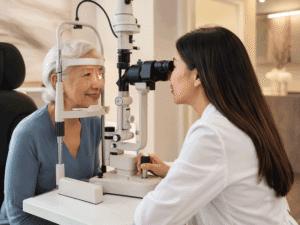
Your evaluation may include:
- Visual acuity testing
- Slit-lamp examination
- Eye pressure measurement
- Dilated examination of the retina and optic nerve
- Retinal imaging
- Optical coherence tomography
- Photographs of structures inside the eye
- Blood tests or imaging when a systemic cause is suspected
- Coordination with a primary care doctor, rheumatologist, infectious-disease specialist, or another physician
A comprehensive eye exam gives the doctor a broader view of your vision and eye health. Barnet Dulaney Perkins Eye Center’s comprehensive examinations may include slit-lamp evaluation, eye-pressure testing, dilation, and retinal examination.
Testing is individualized. Not every patient needs every laboratory test, and broad testing without a clinical reason may not identify the cause.
How Uveitis Treatment Works
The goals of uveitis treatment are to control inflammation, relieve discomfort, address the underlying cause, and reduce the risk of vision-threatening complications.
Treatment may include one or more of the following approaches.
Corticosteroid Treatment
Corticosteroids help reduce inflammation. Depending on the location and severity of uveitis, treatment may involve steroid eye drops, oral medication, an injection near or inside the eye, or another localized delivery method.
Steroid treatment requires medical supervision. Corticosteroids may raise eye pressure, contribute to cataract development, or worsen certain infections when used incorrectly.
Do not use leftover steroid drops or medication prescribed to another person. A red eye caused by infection may require a very different treatment plan.
Dilating or Cycloplegic Eye Drops
For some forms of anterior uveitis, doctors prescribe drops that temporarily widen the pupil and relax the muscles inside the eye. These drops may reduce pain caused by muscle spasms and help prevent the iris from sticking to the lens.
Infection-Specific Medication
When an infection causes uveitis, treatment must address that infection. Depending on the diagnosis, this may involve antiviral, antibiotic, antifungal, or antiparasitic medication.
Anti-inflammatory treatment alone may not be appropriate when an active infection is present.
Immune-Modulating Treatment
Recurrent, chronic, severe, or steroid-dependent uveitis may require medication that changes the immune system’s inflammatory response. An ophthalmologist may coordinate this treatment with a rheumatologist or another medical specialist.
The treatment choice depends on the diagnosis, other health conditions, medication risks, and the structures involved.
Treatment for Complications
Uveitis and some medications used to control it can contribute to elevated eye pressure, glaucoma, cataracts, macular swelling, retinal damage, or scar tissue.
Patients who develop pressure-related concerns may need glaucoma evaluation and treatment. Uveitic glaucoma requires control of both inflammation and elevated intraocular pressure.
If inflammation or prolonged steroid treatment contributes to lens clouding, your doctor may monitor the cataract and discuss cataract care when it begins to interfere with daily vision.
Why Follow-Up Visits Matter
Uveitis symptoms may improve before the inflammation has completely resolved. Stopping medication too quickly or missing follow-up visits may allow inflammation to return.
During follow-up care, your doctor may:
- Recheck inflammation inside the eye
- Measure eye pressure
- Examine the retina and optic nerve
- Repeat imaging
- Adjust medication
- Gradually taper steroid treatment
- Watch for cataracts, glaucoma, or macular swelling
Some forms of uveitis occur once. Others recur or become chronic. Following the prescribed treatment and monitoring schedule can help your doctor respond before inflammation causes additional damage.
Protect Your Vision With an Accurate Diagnosis
Uveitis treatment is not one-size-fits-all. The same symptoms can appear with infection, retinal disease, glaucoma, corneal problems, dry eye, or other conditions, and each requires a different response.
If you have persistent eye pain, redness, light sensitivity, floaters, or blurry vision, schedule an evaluation rather than waiting for the symptoms to resolve on their own. Barnet Dulaney Perkins Eye Center provides comprehensive and specialty eye care at locations across Arizona.
Schedule your eye evaluation online and take the next step toward identifying the cause of your symptoms and protecting your vision.