

Night blindness can make it harder to drive after sunset, walk through a dimly lit hallway, adjust to a darkened room after leaving a brightly lit store, or recognize shapes in low light. Some people describe it as poor night vision. Others say their eyes take too long to adjust, headlights feel overpowering, or dark areas look unusually difficult to navigate.
Night vision problems can result from several causes, including cataracts, changes in prescription, retinal conditions, glaucoma, dry eye, corneal changes, vitamin A deficiency, and certain inherited eye diseases. Because the cause can range from correctable to serious, persistent difficulty seeing at night should be evaluated with an eye exam.
At Barnet Dulaney Perkins Eye Center, patients across Arizona can schedule a comprehensive eye exam to determine whether night blindness is related to cataracts, prescription changes, retinal concerns, glaucoma, dry eye, or another eye condition.
How Night Vision Works
Your eyes use different retinal cells to see in different lighting. Cone cells help you see color and fine detail in brighter light. Rod cells help you see in dim light and support your ability to adjust when the lights go down.
When you walk from bright Arizona sunlight into a dark theater, your eyes need time to adjust. Your pupils dilate, your retina becomes more sensitive to low light, and your brain processes the available visual information. A short adjustment period can be normal. But if low-light vision feels unusually poor, takes much longer than expected, or affects safety, something else may be happening.
Night blindness is not a disease by itself. It is a symptom. The key is determining whether the problem stems from how light enters the eye, how the retina responds to light, or how another eye condition affects contrast, glare, or visual clarity.
Signs Of Night Blindness
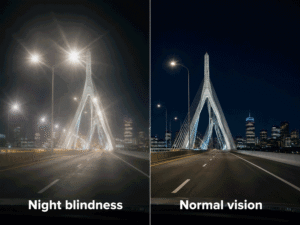
Common signs may include:
- Difficulty seeing pedestrians, curbs, or lane markings
- More glare, halos, or starbursts around headlights
- Slow adjustment when moving from bright light to darkness
- Trouble walking in dim rooms, restaurants, theaters, or parking lots
- Needing brighter light to read, cook, or move around safely
- Reduced side vision or bumping into objects in low light
If night vision changes occur suddenly, with pain, flashes, new floaters, sudden blur, or loss of side vision, seek urgent care or call your eye doctor right away.
Cataracts Can Make Night Driving Harder
Cataracts are among the most common causes of worsening night vision in adults. A cataract forms when the eye’s natural lens becomes cloudy. As the lens clouds, less light reaches the retina, and incoming light may scatter inside the eye.
That can make headlights, streetlights, and signs look hazy or overly bright. Colors may look dull. Vision may feel cloudy, especially while driving at night or in rainy conditions.
If cataracts are affecting your daily life, Barnet Dulaney Perkins Eye Center offers cataract surgery in Arizona. Cataract surgery removes the cloudy natural lens and replaces it with a clear artificial lens. For many patients, this can improve clarity, contrast, and confidence in night driving.
Prescription Changes And Glasses Can Affect Night Vision
Poor night vision may also be due to an outdated glasses prescription, uncorrected nearsightedness, astigmatism, or changes in how your eyes focus. Even a small change in prescription can become more noticeable at night because the pupil naturally dilates in dim light.
A larger pupil can allow more peripheral light rays into the eye, which may make blur, glare, halos, or starbursts more obvious. Scratched, dirty, or poorly fitting contacts, or older lens coatings, can also make night driving harder.
A comprehensive eye exam can help determine whether your prescription is part of the problem. If updated eyewear is needed, Barnet Dulaney Perkins Eye Center optical shops can help with prescription glasses, lens options, and coatings that may improve clarity and comfort.
Retinal Conditions Can Affect Low-Light Vision
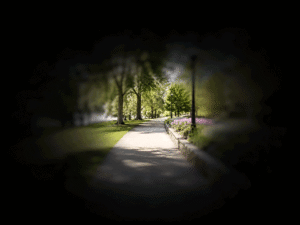
Retinitis pigmentosa is an inherited retinal condition that often affects night and peripheral vision early. Other retinal problems, including diabetic retinopathy, macular degeneration, retinal detachment, and inflammatory retinal conditions, may also affect vision in different ways.
If your night blindness is accompanied by reduced peripheral vision, new blind spots, flashes, floaters, distorted vision, or a family history of inherited retinal disease, your eye doctor may recommend retinal testing. Barnet Dulaney Perkins Eye Center provides retina care for patients across Arizona, with advanced imaging and evaluation for retinal and macular conditions.
Glaucoma And Side Vision Changes
Glaucoma often develops slowly and may not cause early symptoms. Over time, it can damage the optic nerve and reduce peripheral vision. Because side vision helps with orientation in dim settings, glaucoma-related vision loss may make night driving, walking, stairs, or unfamiliar spaces feel less safe.
Glaucoma is not always the first cause people think of when they notice night vision problems, but it deserves attention, especially for adults over 40, people with a family history of glaucoma, and patients with high eye pressure or other risk factors.
Barnet Dulaney Perkins Eye Center offers glaucoma treatment in Arizona, including testing, monitoring, and treatment options designed to help protect long-term vision.
Other Causes Of Night Vision Problems
Several other issues can affect night vision or make low-light environments more difficult.
Dry eye can cause fluctuating blur, glare, and visual fatigue, especially during long drives, screen use, windy conditions, or exposure to air conditioning. Corneal conditions can scatter light, creating halos or glare. Some medications may affect pupil size, tear production, or visual clarity. Vitamin A deficiency can affect night vision, although it is less common in the United States than in some other parts of the world.
Previous eye surgery, diabetes, neurologic conditions, and eye injuries may also affect nighttime vision. Because so many causes can overlap, an eye exam is the safest way to narrow the problem.
How An Eye Exam Helps Identify The Cause
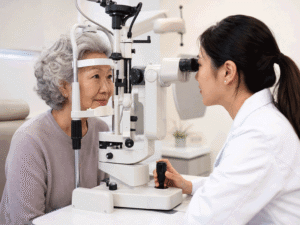
Testing may include visual acuity, refraction, pupil testing, eye pressure measurement, slit-lamp exam, dilation, retinal exam, and additional imaging when needed. Your doctor may also check for cataracts, glaucoma, retinal disease, corneal changes, dry eye, and changes in your prescription.
This matters because treatment depends on the cause. Updated glasses may help one patient. Cataract surgery may help another. A retinal condition or glaucoma may require ongoing monitoring and medical care. The right diagnosis helps you avoid guessing and gives you a clearer plan.
Schedule An Eye Exam For Night Vision Problems In Arizona
Night blindness can affect independence, safety, confidence, and quality of life. It can make nighttime driving stressful, outdoor activities harder, and familiar spaces feel less predictable after dark.
Barnet Dulaney Perkins Eye Center provides comprehensive eye exams and advanced eye care across Arizona, including Phoenix, Scottsdale, Mesa, Chandler, Glendale, Goodyear, Surprise, Tucson, Flagstaff, Lake Havasu, and nearby communities.
If you have trouble seeing at night, notice glare around headlights, or feel unsafe in low-light settings, schedule an eye exam with Barnet Dulaney Perkins Eye Center. Your doctor can help determine whether your night vision problems are related to cataracts, changes in your prescription, retinal concerns, glaucoma, dry eye, or another eye condition.
Schedule an eye exam online today to find out what is causing your night blindness and what treatment options may help.