

Can the evil eye affect your vision? For patients in Arizona, medical research has not identified the evil eye as a cause of vision changes, but the symptoms people associate with it can be real. A fluttering eyelid, fluctuating blur, watery eyes, headaches, or light sensitivity may be due to dry eye, eye strain, a change in prescription, cataracts, migraine, inflammation, or another medical condition.
Cultural traditions can shape how people understand an unsettling experience. Seeking an eye exam does not dismiss those traditions. It provides a medical explanation and helps determine whether you need simple lifestyle changes, treatment, monitoring, or urgent care.
At Barnet Dulaney Perkins Eye Center, you can schedule an eye exam to discuss twitching, blurry vision, or any other changes in your sight.
The Evil Eye Is Not a Medical Eye Condition
Belief in the evil eye appears in Mediterranean, Middle Eastern, Latin American, South Asian, and other cultural traditions. Although customs and symbols vary, the belief often connects another person’s envy or harmful attention with illness, discomfort, or misfortune.
Eye symptoms can make that explanation feel convincing because they may begin without warning. An eyelid may suddenly flutter. Vision may blur and then clear after blinking. One eye may become watery, gritty, or unusually sensitive to light.
When someone asks, “Can the evil eye affect your vision?” an eye doctor looks for physical causes involving the eyelids, tear film, cornea, focusing system, natural lens, retina, or optic nerve. Identifying the source of the symptom is the first step toward protecting your sight.
A Twitching Eyelid Is Usually Temporary

This type of twitch usually does not mean the eyeball itself is moving or that your vision is getting worse. It may improve with better sleep, reduced caffeine intake, screen breaks, and treatment for dryness or irritation.
Schedule an evaluation if the twitch becomes forceful, closes the eye, spreads into the cheek or other facial muscles, or is accompanied by eyelid drooping, weakness, redness, swelling, pain, or discharge. Barnet Dulaney Perkins Eye Center’s guide to common causes of eyelid discomfort explains several problems that can affect the eyelids and surrounding tissues.
Dry Eye Can Cause Blur, Watering, and Irritation

The tear film forms a smooth optical surface across the front of the eye. When that tear film becomes unstable, vision can fluctuate even when your glasses or contact lens prescription is correct.
Arizona’s low humidity, wind, air conditioning, and seasonal irritants can make dry eye symptoms more noticeable. Screen use may also reduce blinking, allowing tears to evaporate more quickly.
Allergies, eyelid inflammation, meibomian gland dysfunction, contact lens irritation, and corneal conditions can create similar symptoms. The Barnet Dulaney Perkins Eye Center’s guide to chronic dry eye can help you recognize common warning signs, but an eye exam is the best way to determine what is affecting your eyes.
Blurry Vision May Come From Your Prescription or Cataracts

The Barnet Dulaney Perkins Eye Center blog about squinting with glasses explains how an outdated prescription, lens design, frame fit, dry eye, or another eye condition may interfere with clarity.
Cataracts are another common cause of gradual vision changes. As the natural lens inside the eye becomes cloudy, colors may appear faded, and lights may produce more glare or halos. Night driving and reading in dim lighting can also become more difficult.
Cataracts usually develop slowly. They do not typically explain sudden vision loss or an abrupt dark area in your sight. If cloudy vision, glare, or reduced contrast is interfering with daily activities, an eye doctor can help determine when cataract surgery may be appropriate.
Explore our cataract guide and answers to common cataract surgery questions to learn more about the procedure. If your doctor recommends surgery, you can review cataract lens options and cataract surgery costs, learn how to prepare for cataract surgery, and find out what to expect during recovery.
Screens, Stress, and Light Sensitivity Can Overlap
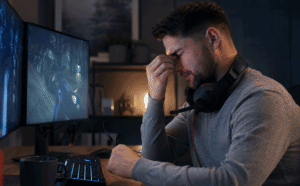
These symptoms may become more noticeable when you are tired, stressed, working in dry indoor air, or using an outdated prescription. Stress can also make eyelid twitching more frequent.
Light sensitivity, also called photophobia, may occur with dry eye, migraine, corneal irritation, inflammation, infection, or other conditions. Learn more about photophobia and light sensitivity if normal sunlight or indoor lighting has become painful or difficult to tolerate.
Persistent blurred vision, recurring headaches, double vision, or symptoms that interfere with daily tasks should not be attributed to stress or screen use without an eye examination.
When Vision Changes Need Urgent Care
Some eye symptoms should not be waited out until a routine appointment.
Seek prompt medical care for sudden vision loss, a dark curtain or shadow in your sight, a sudden increase in floaters, flashes of light, severe eye pain, a significant eye injury, sudden double vision, or a very red eye with pain and reduced vision.
These symptoms may indicate a retinal tear or detachment, acute inflammation, infection, corneal injury, or another condition that could threaten vision.
Contact an eye care provider immediately during business hours. For a medical emergency after hours, call 911 or go to the nearest emergency department.
A Comprehensive Eye Exam Can Replace Guesswork
A comprehensive eye exam does more than determine whether you need glasses. Depending on your symptoms, your eye doctor may evaluate your prescription, eye alignment, tear film, cornea, eye pressure, natural lens, retina, and optic nerve.
Barnet Dulaney Perkins Eye Center provides comprehensive eye exams at locations across Arizona. Because twitching, blurring, irritation, and light sensitivity can have multiple causes, an individualized examination is the safest way to understand what is changing.
Get a Clear Medical Answer for Your Symptoms
Your cultural traditions may influence how you interpret an unexpected symptom, but you should not have to guess about your sight. If twitching, blurry vision, irritation, or light sensitivity persists or affects your daily life in Arizona, schedule an eye care appointment with Barnet Dulaney Perkins Eye Center and get a clear plan to protect your vision.