

Cataract surgery can raise many questions. You may wonder whether your symptoms are really caused by cataracts, what happens during surgery, which lens to choose, and how long cataract surgery recovery will take.
Cataracts develop when the natural lens inside the eye becomes cloudy. They can make vision blurry, dim, or hazy and may cause glare, faded colors, or difficulty driving at night. When these changes begin interfering with daily activities, a cataract evaluation at one of our eye centers can help determine whether surgery is the right next step.
Below are answers to 31 common questions patients ask before, during, and after cataract surgery.
1. What Is a Cataract?
A cataract is a clouding of the eye’s natural lens. The lens normally helps focus light onto the retina, but as it becomes cloudy, less light passes through properly. This can cause blurry vision, glare, faded colors, and other visual changes.
2. What Are the Most Common Symptoms of Cataracts?
Common cataract symptoms include:
- Blurry, cloudy, dim, or hazy vision
- Glare or halos around lights
- Trouble driving at night
- Faded or yellowed colors
- Increased sensitivity to bright light
- Needing more light to read
- Frequent changes to your glasses prescription
- Double vision in one eye
Cataracts usually develop gradually, so the changes may be easy to overlook at first.
3. What Causes Cataracts?
Most cataracts develop as part of the natural aging process. Proteins inside the eye’s lens begin to break down and collect together, causing the lens to become cloudy.
Other factors that may increase the likelihood of cataracts include diabetes, eye injuries, certain medications, previous eye surgery, prolonged exposure to ultraviolet light, and a family history of cataracts.
4. At What Age Do Cataracts Usually Develop?
Cataracts become more common with age, particularly after age 60. However, they can develop earlier because of genetics, diabetes, an eye injury, medication use, or other health factors.
Some people have early cataracts without noticing meaningful vision changes for years.
5. Can Cataracts Go Away Without Surgery?
No. Cataracts do not go away on their own, and eye drops, vitamins, or glasses cannot remove them.
During the early stages, brighter lighting or an updated prescription for your glasses may help you function more comfortably. Cataract surgery is the only way to remove the cloudy natural lens.

6. How Do I Know Whether I Need Cataract Surgery?
You may be ready to discuss surgery when cataracts interfere with activities that matter to you, such as:
- Driving safely
- Reading
- Working
- Using a phone or computer
- Watching television
- Recognizing faces
- Cooking
- Enjoying hobbies
- Moving around independently
You do not need to wait until your vision becomes severely limited. The decision is based on how cataracts affect your life, your overall eye health, and your personal vision needs.
For a closer look at this decision, read about cataract surgery timing, reasons to wait, and signs to discuss with your doctor.
7. What Happens During a Cataract Evaluation?
Your cataract evaluation at Barnet Dulaney Perkins will include a comprehensive, dilated eye exam with detailed eye measurements. Your doctor will evaluate the cataract and check for other eye conditions that could also affect your vision.
The visit is also an opportunity to discuss your daily activities, visual priorities, and cataract lens options. Barnet Dulaney Perkins surgeons use the evaluation to consider your eye health, measurements, lifestyle, and goals before recommending a treatment plan.
8. Can I Wait to Have Cataract Surgery?
In many cases, cataract surgery is not an emergency. You may be able to monitor the cataract if you can still safely and comfortably perform your usual activities.
Waiting too long, however, may make driving, reading, and other daily activities increasingly difficult. Your eye doctor can help you decide when the benefits of surgery may outweigh the reasons to continue waiting.
9. Is Cataract Surgery Considered Major Surgery?
Cataract surgery is a surgical procedure, but it is generally performed on an outpatient basis. Most patients return home the same day.
Although the procedure is common and usually brief, it still requires careful planning, eye measurements, lens selection, and postoperative follow-up.
10. What Happens During Cataract Surgery?
During cataract surgery, the surgeon removes the cloudy natural lens and replaces it with a clear artificial lens called an intraocular lens, or IOL.
The general process includes:
- Numbing the eye.
- Making a very small opening in the eye.
- Breaking apart and removing the cloudy lens.
- Placing the new lens implant inside the eye.
- Checking the position of the implant.
The incision is typically small and may heal without stitches.
11. Are You Awake During Cataract Surgery?
Most patients are awake, but the eye is numbed before the procedure. Medication may also be provided to help you feel relaxed.
You may notice light, movement, or colors, but you should not see the procedure in detail.
12. What Happens If I Blink During Surgery?
You do not need to worry about blinking. A small device gently holds the eyelids open during the procedure.
Your surgical team will also help position your head and guide you throughout the surgery.
13. Does Cataract Surgery Hurt?
Most patients do not describe cataract surgery as painful because numbing medication is used. You may notice pressure, light, or movement, but you should not feel the surgical steps.
Afterward, temporary scratchiness, watering, dryness, or light sensitivity can occur as the eye heals.
14. How Long Does Cataract Surgery Take?
The surgical portion often takes less than 20 minutes. Your full visit will take longer due to registration, preparation, dilation, medication, surgery, and postoperative monitoring.
Plan to spend additional time at the surgery center and arrange for someone to drive you home.
15. Are Both Eyes Treated on the Same Day?
Cataract surgery is commonly performed on one eye at a time. The second eye is usually scheduled separately after the first eye has started healing.
The timing of procedures depends on your surgeon’s recommendations, your eye health, and your recovery after cataract surgery.
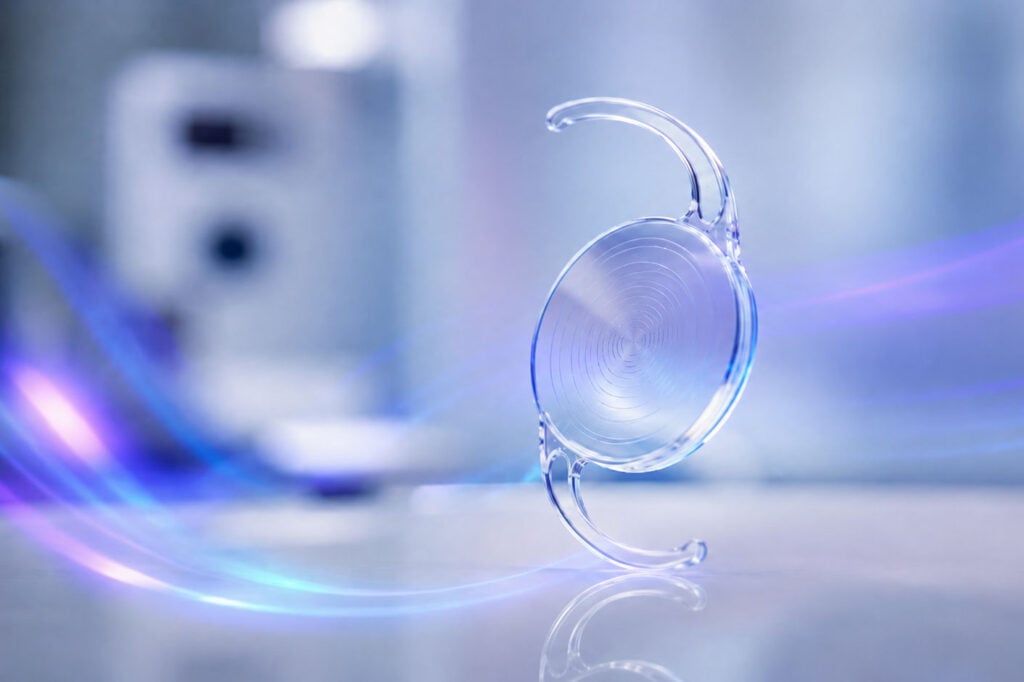
16. What Is an Intraocular Lens?
An intraocular lens is a small artificial lens placed in the eye after cataract surgery. It remains in the eye permanently and takes over the focusing role of the natural lens.
Different lenses are designed to support different distances and vision goals.
17. What Cataract Lens Options Are Available?
Cataract lens options may include:
- Monofocal lenses: Designed to focus at one primary distance.
- Toric lenses: Designed to correct certain types of astigmatism.
- Multifocal or trifocal lenses: Designed to support vision across more than one distance.
- Extended-focus lenses: Designed to provide an extended range, often including distance and intermediate vision.
- Light Adjustable Lens: A lens that can be adjusted after surgery through a series of controlled light treatments.
Barnet Dulaney Perkins Eye Center offers basic and laser-assisted cataract procedures, along with several lens options for appropriate candidates.
18. How Do I Choose the Right Cataract Lens?
Your lens choice should be based on more than the name of the technology. Your doctor will consider:
- The health of your cornea, retina, and optic nerve
- Whether you have astigmatism
- Previous LASIK or PRK
- Your work and hobbies
- How often do you drive at night
- Whether near, intermediate, or distance vision matters most
- How comfortable are you with using glasses
- Your budget and insurance coverage
No single lens is best for everyone. The right choice is the one that fits your eyes and realistic expectations.
19. What Is the Light Adjustable Lens?
The Light Adjustable Lens, or LAL, is an advanced lens implant whose prescription power can be refined after cataract surgery.
After the eye begins healing, controlled ultraviolet light treatments are used to adjust the lens. Once the desired vision is reached, the lens power is permanently locked in. Patients must attend several postoperative appointments and wear the required UV-protective glasses during the adjustment period.
20. Can Cataract Surgery Correct Astigmatism?
Cataract surgery may reduce certain types of astigmatism through a toric lens, laser-assisted treatment, or another surgical approach.
The amount and type of astigmatism must be measured before surgery. Your surgeon can explain how much correction may be possible and whether glasses may still be needed.
21. Will I Still Need Glasses After Cataract Surgery?
Possibly. Cataract surgery may reduce your dependence on glasses, but no lens can guarantee that you will never need them.
A standard monofocal lens often provides focus at one main distance, meaning glasses may still be needed for reading, computer work, or other distances. Advanced lenses may provide a broader range of vision, but glasses can still be helpful for fine print, night driving, or certain tasks.
22. Can Cataract Surgery Improve Night Driving?
It may improve night driving when cataracts are the primary cause of difficulty seeing headlights, streetlights, and road signs.
Some patients may continue to notice halos, glare, or other nighttime symptoms because of dry eye, astigmatism, retinal conditions, or the optical characteristics of their lens implant. Your doctor can help set expectations based on your eyes and lens selection.
23. What Will My Vision Look Like Immediately After Surgery?
Vision may be blurry, hazy, bright, or uneven during the first hours or days. Colors may also appear brighter because the cloudy, yellowed natural lens has been removed.
Vision often improves gradually as swelling decreases and the eye adjusts to the implant. The experience can differ between your first and second eye.
24. How Long Does Cataract Surgery Recovery Take?
Many patients return to light activities within a few days, but complete healing can take several weeks.
Your recovery may depend on your eye health, the cataract’s density, the surgical approach, and your eye’s response. Follow-up appointments allow your doctor to monitor vision, eye pressure, and healing.

25. What Should I Avoid After Cataract Surgery?
Your surgeon will give you specific instructions. Common temporary precautions may include avoiding:
- Rubbing or pressing on the eye
- Swimming or hot tubs
- Eye makeup
- Heavy lifting
- Strenuous exercise
- Dusty or dirty environments
- Getting soap or non-sterile water in the eye
- Driving until you have been cleared
Following these instructions helps protect the eye while it heals.
26. When Can I Drive After Cataract Surgery?
You cannot drive yourself home after surgery. Many patients can return to driving after a postoperative examination confirms that their vision and healing are sufficient.
The timing varies, so do not assume you are ready based only on how your eye feels.
27. When Can I Return to Work or Exercise?
People with desk jobs may be able to return to work relatively quickly. Jobs involving lifting, dust, chemicals, machinery, or strenuous activity may require more time away.
Walking and other light activities may be permitted early in recovery, while swimming, heavy lifting, and intense exercise may need to wait until your surgeon approves them.
28. What Symptoms Should I Report After Surgery?
Contact your eye care team promptly if you experience:
- Significant or worsening pain
- Sudden loss or decline in vision
- Increasing redness
- Pus-like discharge
- New flashes or a sudden increase in floaters
- A curtain, shadow, or dark area in your vision
- Severe nausea accompanied by eye pain
- Symptoms that suddenly become worse instead of better
Do not wait for a follow-up appointment when symptoms feel severe or unusual. Request an emergency eye care appointment by calling 602-955-1000.
29. Can Cataracts Come Back After Surgery?
No. Once the cloudy natural lens has been removed, that cataract cannot grow back.
Some patients later develop cloudiness in the thin capsule behind the lens implant. This is called posterior capsule opacification, also known as a secondary cataract. It can often be treated with a brief in-office laser procedure.
30. Does Medicare or Insurance Cover Cataract Surgery?
Medicare and many medical insurance plans may cover cataract surgery when it is considered medically necessary, and plan requirements are met. Coverage commonly includes conventional surgery with a standard monofocal lens.
Advanced technology lenses, laser-assisted options, and elective astigmatism correction may involve additional out-of-pocket costs. Your final responsibility depends on your deductible, coinsurance, provider, facility, and specific plan benefits.
31. How Do I Schedule a Cataract Evaluation?
You can schedule a cataract evaluation with Barnet Dulaney Perkins online at any time. Online scheduling allows you to compare available locations and appointment times without waiting on the phone.
Some locations use separate scheduling links, so select the office where you would like to be seen and follow the instructions provided. You may also call 602-955-1000 during regular business hours for scheduling assistance.
Schedule a Cataract Evaluation To Learn More
You do not need to have every cataract surgery decision made before your first appointment. Your evaluation is where the process begins.
A cataract doctor at Barnet Dulaney Perkins Eye Center can determine whether cataracts are causing your vision changes, examine the overall health of your eyes, and explain lens options that may fit your lifestyle. When cataracts begin interfering with driving, reading, work, or everyday independence, schedule a cataract evaluation and learn what options are available to you.
For more information before your consultation, download our cataract guide.