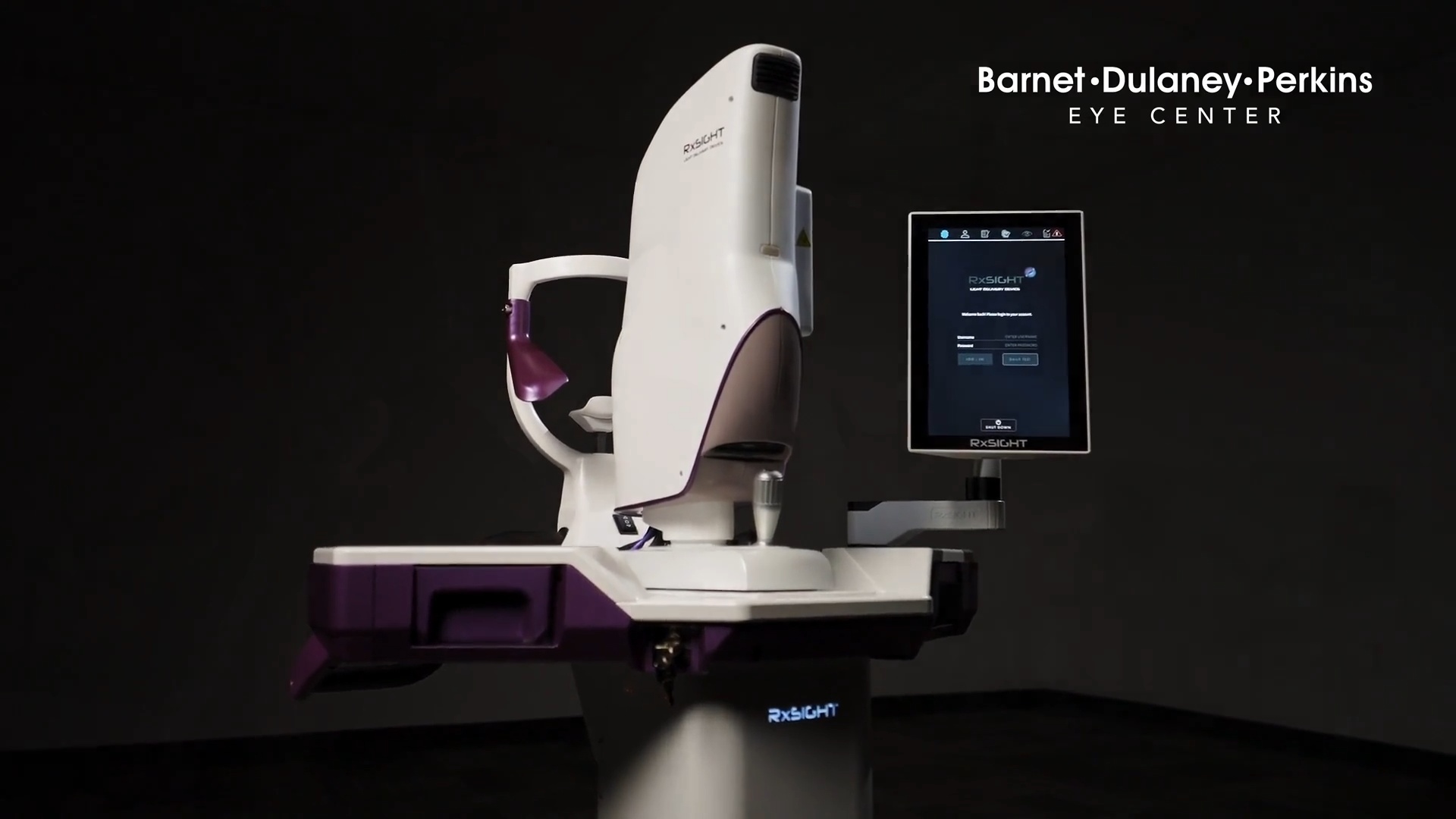
The Light Adjustable Lens

The Light Adjustable Lens™ (LAL®) is a premium intraocular lens offered for cataract surgery at Barnet Dulaney Perkins in Arizona.

What is the Light Adjustable Lens (LAL)?

The Light Adjustable Lens™ is the only adjustable intraocular lens (IOL) available, offering the opportunity to optimize vision following lens implantation and recovery. If you and your cataract surgeon decide that the Light Adjustable lens or LAL is right for you, you will undergo standard cataract surgery, followed by additional light treatments to achieve your desired vision results.

What makes the Light Adjustable Lens exceptional is that after your eye has fully healed, you have the opportunity to customize your vision after cataract surgery completely. At this stage, you will have the chance to compare and preview various vision outcomes based on your unique preferences and lifestyle needs. Following this, your doctor will use a specialized light treatment to reshape your implanted lens with pinpoint accuracy, tailored to your individual prescription requirements. Our doctor will perform several light treatments (typically 3 to 5) to attain your vision objectives.

Play Video
Video thumbnail

How Does the Light Adjustable Lens Work?

Play Video
Video thumbnail

The Light Adjustable Lens is made from a photosensitive material that responds to carefully controlled ultraviolet (UV) light. After cataract surgery, your Barnet Dulaney Perkins surgeon can use a specialized in-office device, the Light Delivery Device™ (LDD), to make precise adjustments to the focusing power of your implanted lens without another surgery.

For each light treatment, you will sit comfortably in front of the Light Delivery Device while it delivers a customized pattern of UV light to your lens. The treatment is non-invasive and typically takes about 90 seconds. Your doctor uses these adjustments to fine-tune your vision based on your healing, lifestyle, and the vision outcome you have chosen together.

Most patients have three to five light treatments, spaced at least three days apart. You will return for a follow-up visit about three days after each treatment so your care team can evaluate your vision and determine whether further adjustment is needed.

Once you and your surgeon are satisfied with your vision, you will receive final lock-in treatments. These treatments permanently set the lens power so it cannot be changed again.

What Vision Issues Can the Light Adjustable Lens Help Address?

Nearsightedness

Farsightedness

Astigmatism

Residual Prescription After Surgery

Vision goals That Require Precise Customization

Prior Refractive Surgery History

Visual Side Effects Associated with Multifocal Lenses

Reduce The Need For Glasses

Abstract blue, purple, and pink dotted waves representing post-surgery Light Adjustable Lens vision customization.

Why Does Post-Surgery Adjustability Matter?

Every eye heals differently after cataract surgery and traditional lenses can sometimes miss the target prescription, forcing patients to rely on glasses post-surgery. With the LAL, a surgeon uses a specialized UV light device weeks after the procedure—once the eye’s shape has completely stabilized—to non-invasively reshape the lens inside the eye. This unique ability to fine-tune the lens based on how the patient actually sees in real life provides unmatched precision, corrects minor astigmatisms, and drastically maximizes the chances of achieving 20/20 vision without glasses.

What to Expect from Light Adjustable Lens Surgery

when should I get cataract surgery, senior man during a slit-lamp eye exam, Barnet Dulaney Perkins Eye Center

Your experience begins with a comprehensive cataract evaluation. Your eye doctor will examine your cataracts, review your overall eye health, measure your cornea and prescription, and discuss your daily visual needs.

Your surgeon will also ask about the activities that matter most to you. For example, you may prioritize distance vision for driving, comfortable vision for computer work, or reducing your need for glasses during everyday tasks. The best lens is not the same lens for every patient, so it is important to voice your needs.

Graphic showing advanced light-adjustable lens process and how it impacts cataract surgery cost in Arizona

During cataract surgery, your surgeon removes the cloudy natural lens and replaces it with the Light Adjustable Lens. The surgical process is similar to cataract surgery with other intraocular lenses.

After surgery, your eye needs time to heal before your first adjustment treatment. During this time, your vision may continue to improve as your eye recovers.

UV sunglasses for LAL lens.After receiving the Light Adjustable Lens, you will need to wear special UV-protective glasses during all waking hours until 24 hours after your final lock-in treatment.

These glasses are essential because ordinary ultraviolet light from indoor and outdoor sources can cause unintended changes to the lens before your surgeon completes the adjustment process.

Your care team will explain when and how to wear your protective glasses. You can remove them while sleeping and during brief activities such as showering or applying eye drops, as long as you avoid direct sunlight and follow your surgeon’s instructions.

Your first Light Delivery Device treatment is commonly scheduled about two to three weeks after surgery, once your vision has stabilized enough for your surgeon to assess your result.

During each visit, your doctor may check your prescription, ask how you are seeing in daily life, and determine whether an adjustment is appropriate.

Most patients receive several light treatments. At Barnet Dulaney Perkins, the total process typically involves three to five treatments, spaced to allow your surgeon to evaluate the effect of each adjustment.

Each treatment is brief and performed in the office. Your care team will give you personalized instructions for your visits, eye drops, glasses, and recovery.

Once you and your surgeon have reached the best vision target for your eyes and lifestyle, your doctor performs final lock-in treatments.

These treatments stabilize the lens so that its prescription can no longer change. After the final lock-in process is complete and your surgeon confirms it is safe to do so, you may stop wearing the UV-protective glasses.

Restore Your Vision with LAL

Play Video
Video thumbnail
Play Video
Video thumbnail
Clear intraocular lens on a reflective surface with soft blue and purple light, representing the Light Adjustable Lens used in cataract surgery.

Light Treatment Schedule

Initial Light Treatment

Approximately 2-3 weeks after surgery

Secondary Light Treatment

Approximately 1 week after initial light treatment

Additional Light Treatments (as required)

Approximately 1 week after each prior light treatment

Abstract blue, purple, and pink dotted waves representing post-surgery Light Adjustable Lens vision customization.

Find Out If The Light Adjustable Lens Is Right For You

At Barnet Dulaney Perkins Eye Center, your cataract surgeon and care team take time to understand your eye health, prescription, daily activities, and priorities before recommending a lens. Schedule a cataract evaluation today to explore your options for customized vision after cataract surgery.

FAQ: Light Adjustable Lens

The number of treatments varies based on your healing, prescription, and visual goals. Patients may receive up to three adjustment treatments followed by final lock-in treatments.

No. Light treatments are performed in the office with the Light Delivery Device and do not require another surgical procedure.

You must wear the provided UV-protective glasses during all waking hours until 24 hours after your final lock-in treatment. Your care team will explain your specific instructions.

The Light Adjustable Lens may help address astigmatism in eligible patients. Your cataract surgeon will evaluate your measurements and determine whether it is appropriate for your eyes.

It’s possible. Because prior LASIK, PRK, and RK can complicate cataract lens calculations, post-surgery adjustability may be valuable for eligible patients. Your surgeon will determine whether it is the right choice for you.

Possibly. The Light Adjustable Lens can help customize your vision target, but it does not guarantee freedom from glasses for every activity. Some patients still use glasses for fine print, close work, reading, or night driving.

Medicare and many private insurance plans generally cover medically necessary cataract surgery with a standard monofocal lens. The Light Adjustable Lens is an advanced technology lens, so patients typically have an out-of-pocket cost beyond standard insurance coverage. Your care team will review expected costs before surgery