

Posterior capsule opacification can make vision cloudy again after cataract surgery, sometimes weeks, months, or years after the procedure. Although patients sometimes call it a “secondary cataract,” the original cataract has not returned. Instead, cells have clouded the thin membrane that supports the artificial lens inside the eye.
Schedule an eye exam at Barnet Dulaney Perkins Eye Center in Arizona to determine whether posterior capsule opacification is responsible or whether another eye condition requires attention.
What Is Posterior Capsule Opacification?
During cataract surgery, the surgeon removes the cloudy natural lens and replaces it with a clear artificial lens called an intraocular lens, or IOL. The surgeon usually leaves the back portion of the natural lens capsule in place to support the new lens.
Over time, remaining lens cells may grow across that clear capsule. The tissue then becomes hazy, blocking or scattering light as it enters the eye. Doctors call this change posterior capsule opacification, or PCO.
PCO is not a new cataract, and cataracts do not grow back after the cloudy natural lens has been removed. The cloudiness develops behind the lens implant rather than inside it.
Posterior Capsule Opacification Symptoms

- Blurry, hazy, or cloudy vision
- Glare from sunlight or headlights
- Halos around lights
- Reduced contrast or difficulty seeing in dim light
- Colors that appear less vivid
- Trouble reading or recognizing fine details
- A gradual decline in vision after cataract surgery
Symptoms may affect one eye before the other because each eye heals and changes independently.
A comprehensive eye examination can separate PCO from dry eye, glaucoma, retinal disease, corneal problems, prescription changes, or other causes of blurry vision.
How Soon Can PCO Develop After Cataract Surgery?
Posterior capsule opacification may appear months or years after cataract surgery, although the timing varies. Some patients notice a gradual loss of clarity, while others become aware of glare or haze over a shorter period.
Developing PCO does not mean the cataract procedure failed or that the artificial lens has become cloudy. The lens implant usually remains clear. The problem involves the capsule directly behind it.
Patients preparing for surgery can explore common questions and answers about cataract surgery, including what it involves, why cloudy vision may occasionally return later, and why vision may change.
Patients planning cataract surgery can also review cataract surgery costs in Arizona and what to expect during cataract surgery recovery.
How Doctors Diagnose Posterior Capsule Opacification
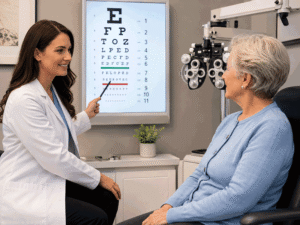
- Visual acuity testing
- Refraction to check your prescription
- Eye pressure measurement
- Slit-lamp examination
- A dilated examination of the lens implant, capsule, retina, and optic nerve
Dilation helps the doctor see whether the capsule has become cloudy and rule out other conditions that can affect vision after cataract surgery.
Sudden vision loss, a dark curtain, flashes, or a sudden increase in floaters does not fit the usual gradual pattern of PCO. Those symptoms require prompt evaluation because they may involve the retina.
How Is Posterior Capsule Opacification Treated?
Doctors commonly treat visually significant PCO with a YAG laser posterior capsulotomy. This outpatient laser procedure creates a small opening in the cloudy capsule so that light can pass more clearly to the retina.
The procedure does not remove or replace the artificial lens. It clears the cloudy membrane behind it.
During treatment, your care team may:
- Dilate the treated eye.
- Apply numbing eye drops.
- Position you at the laser.
- Use focused laser pulses to create an opening in the cloudy capsule.
- Check your eye pressure or provide follow-up instructions when appropriate.
The laser portion usually takes only a few minutes. Many patients notice improved clarity quickly, although vision may remain temporarily blurred from dilation.
Does YAG Laser Capsulotomy Hurt?
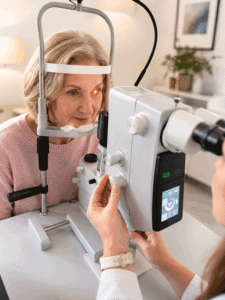
You may see flashes of light during treatment. Temporary floaters can appear afterward as small pieces of the treated capsule move through the eye. These often become less noticeable with time.
Your doctor will explain what to expect based on your eye health, lens implant, retinal history, and other risk factors.
Is YAG Laser Capsulotomy Safe?
YAG laser capsulotomy is widely used to treat posterior capsule opacification, but every procedure carries potential risks. Possible complications include a temporary rise in eye pressure, inflammation, swelling in the central retina, damage to the lens implant, or retinal tear or detachment. Serious complications remain uncommon, but follow-up instructions matter.
Contact us immediately or your eye doctor if you develop:
- Sudden loss of vision
- Increasing eye pain or redness
- A sudden burst of new floaters
- Flashing lights
- A dark curtain or shadow
- Worsening vision after initial improvement
Can Posterior Capsule Opacification Return?
PCO generally does not return after the laser creates a sufficient opening in the cloudy capsule. The opening remains behind the lens implant, allowing light to travel through the visual pathway.
However, future vision changes can still occur due to dry eye, glaucoma, macular degeneration, diabetic eye disease, corneal conditions, retinal problems, or changes in prescription. A new change in vision should receive a fresh evaluation rather than being assumed to come from the capsule.
Clearer Vision After Cataract Surgery in Arizona
If blurry vision, glare, or halos have returned after cataract surgery, posterior capsule opacification may be the cause. A focused examination can confirm what has changed and whether YAG laser capsulotomy may help restore clearer vision.
For an overview of cataract care, download our cataract guide.
Barnet Dulaney Perkins Eye Center offers cataract evaluations and follow-up eye care at convenient locations throughout Arizona. Explore our experienced cataract doctors, find an eye center near you, and schedule an evaluation to learn what may be affecting your vision.