

Tunnel vision can make the world feel like it is closing in on you. You may see clearly straight ahead but miss objects, people, cars, steps, or movement outside your central view. At Barnet Dulaney Perkins Eye Center, patients in Phoenix, Mesa, Chandler, Glendale, Goodyear, Surprise, Tucson, Flagstaff, and throughout Arizona can get help determining whether tunnel vision is due to glaucoma, retinal disease, migraine, injury, or another condition that needs care.
Tunnel vision is another term for peripheral vision loss. Peripheral vision helps you notice what is happening beside you without turning your head. It supports driving, walking through crowds, using stairs, playing sports, and moving safely through daily life.
Because peripheral vision loss can come on slowly or suddenly, timing matters.
What Tunnel Vision Feels Like
Tunnel vision does not always feel dramatic at first. Some people only notice small changes, such as bumping into furniture, missing objects off to the side, struggling in dim light, or feeling less confident while driving.

Common signs include:
- Missing objects to the side
- Trouble seeing cars, people, or motion in the side vision
- Bumping into doorframes or furniture
- Difficulty driving, especially changing lanes
- A dark shadow or curtain in part of the vision
- Sudden loss of side vision
- Trouble seeing in low light
- New flashes, floaters, or spots
If tunnel vision appears suddenly, treat it as urgent.
Glaucoma And Gradual Peripheral Vision Loss
Glaucoma is one of the most important causes of tunnel vision. It damages the optic nerve, which sends visual information from the eye to the brain. Many forms of glaucoma develop quietly, often without pain or early warning symptoms.
Peripheral vision may change first. Because the brain fills in missing areas, some patients do not notice glaucoma-related vision loss until the disease has progressed.
That is why glaucoma treatment in Arizona focuses on early diagnosis, pressure monitoring, optic nerve evaluation, and long-term follow-up. Treatment may include prescription eye drops, laser procedures, medication-delivery options, or surgery, depending on the stage and type of glaucoma.
If you have high eye pressure, a family history of glaucoma, diabetes, thin corneas, high myopia, or are over age 60, regular eye exams become especially important.
Retinal Conditions That Can Affect Side Vision
The retina lines the back of the eye and helps convert light into signals your brain can understand. Retinal problems can cause shadows, blind spots, distorted vision, flashes, floaters, or sudden vision loss.
A retinal detachment can cause a curtain, veil, or shadow over part of vision. Some patients notice flashes of light, new floaters, or loss of peripheral vision before changes in central vision. These symptoms need prompt care.
Barnet Dulaney Perkins Eye Center provides retina treatment in Arizona for conditions involving the retina, vitreous, macula, and diabetic eye disease. If new floaters or spots are part of the symptom pattern, related information about common eye floaters and seeing spots can help explain why sudden changes should be checked.
Other Possible Causes Of Tunnel Vision
Glaucoma and retinal disease are major concerns, but they are not the only possible causes.
Tunnel vision or temporary peripheral vision changes may also happen with ocular migraine, low blood pressure, fainting episodes, panic or stress responses, medication effects, optic nerve problems, stroke, head injury, or neurologic conditions.
The pattern matters. Temporary tunnel vision with shimmering lights may point toward migraine. Sudden vision loss with weakness, facial drooping, severe headache, confusion, or trouble speaking may point toward a medical emergency. A dark curtain or new flashes and floaters may indicate a retinal emergency.
Do not try to diagnose the cause based on symptoms alone. Peripheral vision loss needs the right exam.
How Visual Field Testing Checks Peripheral Vision
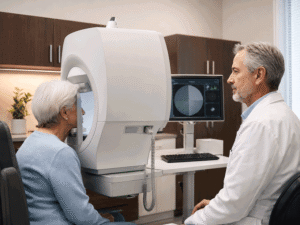
During a visual field test, you respond when you see small lights or targets in different areas of your field of vision. The test maps what you can see centrally and peripherally. It can show blind spots or areas of reduced sensitivity that you may not notice on your own.
Visual field testing is especially important for glaucoma. It can help detect peripheral vision loss, monitor progression, and guide treatment decisions. For more context, learn how doctors interpret glaucoma test results and why eye pressure, visual field testing, and optic nerve appearance all matter in glaucoma diagnosis.
When Tunnel Vision Is Urgent
Seek immediate care if tunnel vision comes on suddenly or appears with:
- Sudden loss of side vision
- A curtain, veil, or shadow in vision
- New flashes or many new floaters
- Severe eye pain
- Sudden blurry vision
- Headache, nausea, or halos around lights
- Weakness, numbness, facial drooping, or trouble speaking
- Recent eye or head injury
These symptoms may involve the retina, optic nerve, eye pressure, blood flow, or the brain. Sudden vision changes should not be ignored until a routine appointment.
Schedule An Eye Exam For Peripheral Vision Changes
Tunnel vision is not something to shrug off. Even gradual peripheral vision loss can affect safety, independence, driving, and long-term eye health.
A comprehensive eye exam can check your eye pressure, optic nerve, retina, visual field, and overall vision. If you are unsure what type of appointment you need, the team can help direct you based on your symptoms, vision needs, and eye health history.