

Can your eye color influence your chances of developing cataracts? Research suggests it might. Some studies have found that people with darker eyes may have a higher risk of certain types of cataracts than those with lighter eyes.
However, eye color is only one possible risk factor. Age, sun exposure, smoking, diabetes, and family history play more established roles in cataract development.
Understanding how eye color relates to cataracts, what causes them, and how to protect your vision can help you make informed decisions about your eye health. Schedule a cataract evaluation at Barnet Dulaney Perkins in Arizona if you are concerned about vision changes.
How Does Eye Color Relate to Cataracts?
Your eye color comes from melanin, the natural pigment found in the iris, which is the colored part of your eye. Brown eyes contain more melanin, while blue and green eyes generally have less.
Research suggests that people with dark brown eyes may be at greater risk of developing certain cataracts.
A study published in the American Journal of Ophthalmology found that people with dark brown eyes had approximately 1.8 times the risk of developing nuclear cataracts over 5 years compared with those with blue eyes.
Researchers believe this relationship may involve how melanin absorbs light and heat. Darker irises absorb more light energy, which could potentially contribute to changes in the eye’s natural lens over time.
However, this explanation has not been conclusively proven, and more research is needed to understand the connection.
Does this mean people with blue eyes are protected from cataracts? No. Cataracts can develop in people with any eye color. Protecting your eyes and maintaining healthy habits are important regardless of whether your eyes are brown, blue, green, or hazel.
Other Factors That Contribute to Cataracts
While eye color may influence cataract risk, several other factors are more strongly associated with cataract development.
Aging
Age is the most common risk factor for cataracts. As you get older, proteins inside your eye’s natural lens begin to break down and clump together, creating cloudy areas that interfere with clear vision.
UV Exposure
Long-term exposure to ultraviolet (UV) radiation from sunlight can damage the lens and increase your risk of cataracts. Spending time outdoors without adequate eye protection may contribute to this damage.
Smoking
Smoking exposes your eyes to harmful chemicals and oxidative stress, which can damage lens proteins. Research consistently links smoking with an increased risk of age-related cataracts.
Diabetes
High blood sugar levels can affect the eye’s natural lens, making people with diabetes more likely to develop cataracts, sometimes at an earlier age.
Genetics and Medications
A family history of cataracts may increase your risk. Long-term use of corticosteroid medications, previous eye injuries, and certain eye conditions can also contribute to cataract formation.
Cataract Prevention: How to Lower Your Risk
Although cataracts cannot always be prevented, healthy lifestyle choices may help reduce your risk or delay their development.
Here are several ways to protect your vision:
- Wear UV-protective sunglasses. Choose sunglasses that block 99%–100% of UVA and UVB rays, and consider wearing a wide-brimmed hat outdoors.
- Avoid smoking. Quitting smoking can benefit both your eye health and overall well-being.
- Manage diabetes. Maintaining healthy blood sugar levels may help reduce your risk of diabetes-related eye complications.
- Eat a balanced diet. Fruits, vegetables, and antioxidant-rich foods support overall eye health, although supplements have not been proven to prevent cataracts.
- Schedule regular eye exams. Comprehensive eye exams can identify cataracts and other vision changes before they significantly affect your daily activities.
Whether you have light or dark eyes, these habits can help protect your long-term eye health.
Can Cataracts Change Your Eye Color?
Cataracts can change how your eyes appear, but they typically do not change your actual eye color.
A cataract develops when the eye’s natural lens, located behind the iris, becomes cloudy. As the cloudiness increases, the pupil may appear gray, white, or yellowish.
In advanced cases, the lens can develop a brownish appearance. This may make it seem as though your eye color has changed, even though the iris itself remains the same.
Cataracts can also affect how you see colors. You might notice that:
- Colors appear faded or less vibrant.
- White objects look slightly yellow.
- Blues and purples become harder to distinguish.
- Your vision seems cloudy or dim.
These changes occur because the cloudy lens affects how light reaches the retina.
If you notice a new change in the actual color of your iris, especially in just one eye, schedule an eye exam. Other eye conditions can cause changes that should be evaluated.
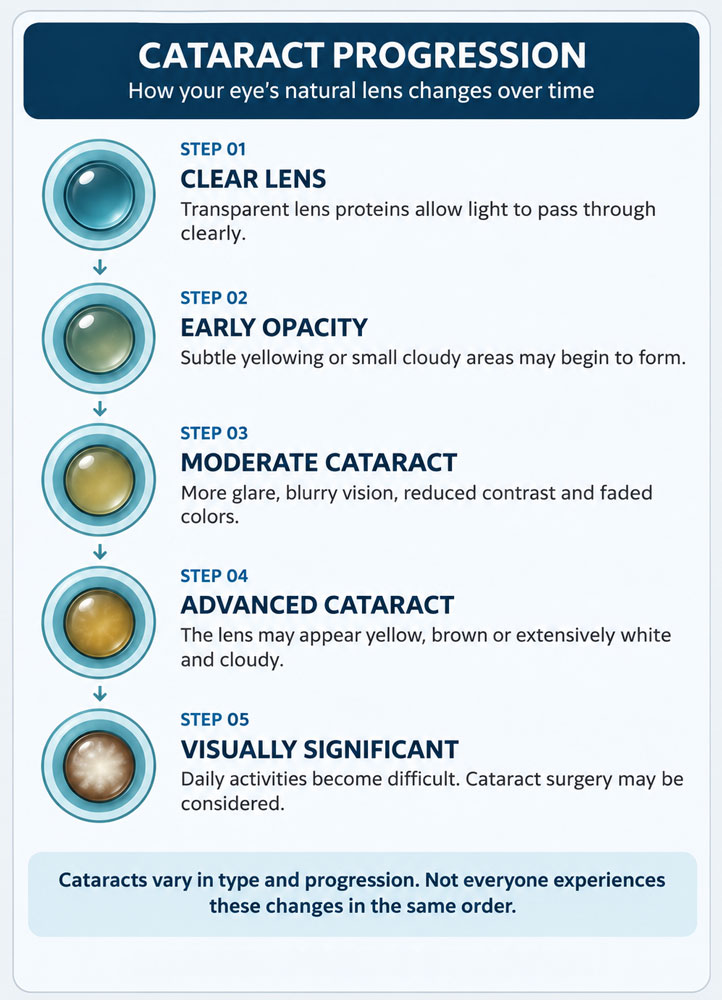
Stages of Cataract Development and How They Relate to Color
Cataracts generally develop gradually, but not all cataracts progress at the same rate or follow the same pattern.
Understanding the progression of cataracts can help you recognize changes in your vision.
Early Cataracts
During the early stages, the lens may develop subtle cloudiness or yellowing. You might experience mild blurry vision, increased glare, or difficulty seeing clearly at night.
Moderate Cataracts
As cataracts progress, the lens becomes cloudier. Colors may appear duller, and everyday activities such as reading or driving may become more difficult.
Advanced Cataracts
In advanced cases, the lens may become significantly cloudy, yellow, brown, or even white, depending on the type of cataract.
Vision can become severely impaired, making cataract surgery necessary to restore clearer sight.
How Cataract Types Affect Lens Color
Different types of cataracts can create different changes in the lens:
- Nuclear cataracts: Develop in the center of the lens and often cause progressive yellowing or browning.
- Cortical cataracts: Create white, spoke-like cloudy areas around the edges of the lens.
- Posterior subcapsular cataracts: Form near the back of the lens and may cause significant glare and blurred vision, sometimes progressing more quickly.
These types do not necessarily develop in sequence, and their appearance can vary from person to person.
Protect Your Vision With a Cataract Evaluation
While some research suggests that darker eye colors may be associated with a higher risk of developing cataracts, eye color alone doesn’t determine whether you’ll develop them. Age, genetics, UV exposure, certain health conditions, and lifestyle habits all play a role in cataract development. Protecting your eyes from UV rays, avoiding smoking, and keeping up with regular eye exams can help support your long-term eye health. However, if you’ve noticed blurry or cloudy vision, increased sensitivity to glare, or difficulty driving at night, it may be time for a cataract evaluation.
At Barnet Dulaney Perkins Eye Center, our experienced cataract specialists can evaluate your vision, determine whether cataracts are affecting your eyesight, and discuss your treatment options, including advanced cataract surgery when appropriate. Call (602) 955-1000 or schedule a cataract evaluation online at one of our 27 locations throughout Arizona.