

Glaucoma surgery during cataract surgery may help some patients treat two eye problems during one planned procedure: cloudy vision from cataracts and high eye pressure from glaucoma. For patients in Las Vegas, Henderson, and Southern Nevada, this combined approach can be especially helpful when glaucoma is mild to moderate, cataracts are affecting daily vision, and an eye surgeon recommends a pressure-lowering procedure such as minimally invasive glaucoma surgery.
Cataracts and glaucoma often affect people in the same stage of life, but they affect vision in different ways. Cataracts cloud the eye’s natural lens, causing blurry vision, glare, halos, faded colors, and trouble driving at night. Glaucoma damages the optic nerve, often slowly and silently, and can lead to permanent vision loss if eye pressure stays too high for that person’s optic nerve.
That is why a cataract evaluation can be an important opportunity to review glaucoma care, intraocular pressure, medication burden, and long-term vision protection.
Why Cataract Surgery Can Be A Good Time To Discuss Glaucoma

This does not mean every person with glaucoma needs surgery during cataract surgery. Some patients do well with prescription eye drops, selective laser trabeculoplasty, or close monitoring. Others need additional pressure control because eye drops are difficult to manage, pressure remains above goal, or glaucoma is progressing.
At Wellish Abrams Vision Institute, patients can connect with glaucoma specialists and cataract surgeons who evaluate both conditions together instead of treating cloudy vision and optic nerve health as separate concerns.
MIGS & Cataract Surgery: The Combined Option Many Patients Ask About
For many patients with mild to moderate open-angle glaucoma, Minimally Invasive Glaucoma Surgery may offer a tissue-sparing way to reduce pressure, reduce dependence on drops, or support long-term glaucoma control. When combined with cataract surgery, the surgeon can remove the cloudy lens and perform a glaucoma procedure during the same operative visit.
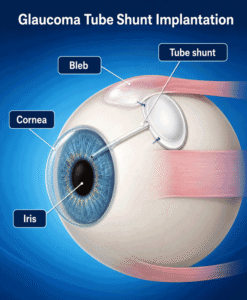
MIGS is usually not the right choice for every glaucoma patient. More advanced or difficult-to-control glaucoma may require traditional surgery, such as trabeculectomy or tube shunt surgery. Your doctor will recommend the safest option based on your eye anatomy, glaucoma type, pressure goal, optic nerve health, medication history, and cataract severity.
Glaucoma Surgery During Cataract Surgery Compared With Cataract Surgery Alone
Cataract surgery alone may slightly lower intraocular pressure in some patients, but it should not be viewed as a complete glaucoma treatment plan for everyone. If glaucoma already needs better pressure control, your surgeon may recommend a combined approach.
| Option | What It Addresses | Best Fit |
| Cataract surgery alone | Removes the cloudy lens to improve vision clarity | Patients whose glaucoma is stable and well-controlled |
| MIGS with cataract surgery | Removes the cataract and adds a pressure-lowering procedure | Many patients with mild to moderate open-angle glaucoma |
| Traditional glaucoma surgery | Creates or supports stronger drainage to lower pressure | More advanced or harder-to-control glaucoma |
The goal is not simply to “do more” during surgery. The goal is to choose the level of treatment that fits the risk, the pressure target, and the patient’s long-term vision needs.
Who May Be A Candidate For A Combined Procedure?
You may be a candidate for glaucoma surgery during cataract surgery if cataracts are interfering with vision and glaucoma needs additional pressure support.
Your surgeon may consider this option if you:
- Have mild to moderate open-angle glaucoma
- Use multiple glaucoma drops
- Have trouble remembering or tolerating daily drops
- Need lower eye pressure to protect the optic nerve
- Have cataracts that affect reading, night driving, glare, or daily activities
- Want to understand whether MIGS & Cataract Surgery fits your long-term plan
A comprehensive eye exam helps your doctor measure eye pressure, examine the optic nerve, evaluate cataract severity, and determine whether additional glaucoma testing is needed before surgery.
What To Expect During The Planning Visit

This is also the time to ask about premium lens technology, recovery expectations, drop schedules, surgical timing, insurance coverage, and whether your procedure may be performed at the Box Canyon Surgery Center.
Patients who want to prepare in advance can review how to prepare for cataract surgery and bring a written list of glaucoma medications to their consultation.
Other Glaucoma Options May Still Matter
Combined surgery is only one part of glaucoma care. Some patients benefit from Selective Laser Trabeculoplasty before or after cataract surgery. Others may be candidates for iDose® TR, a sustained-release glaucoma implant that may reduce the burden of daily drops for eligible patients.
Your treatment plan may include one option or several over time. Glaucoma requires ongoing monitoring because pressure can change, the optic nerve can continue to show signs of stress, and treatment may need adjustment.
Talk With A Cataract And Glaucoma Specialist In Las Vegas Or Henderson
If cataracts are clouding your vision and you also have glaucoma, you do not have to evaluate those problems separately. Wellish Abrams Vision Institute provides cataract and glaucoma care for patients in Las Vegas, Henderson, and nearby Southern Nevada communities.
Schedule an evaluation to learn whether glaucoma surgery during cataract surgery, MIGS & Cataract Surgery, laser treatment, iDose® TR, eye drops, or another approach makes the most sense for your eyes.
Schedule online to take the next step toward a clearer vision and stronger glaucoma management.