

EVO ICL after 40 may be an option for adults with a healthy natural lens who primarily want to correct nearsightedness, with or without astigmatism. Age alone does not rule out the procedure, but presbyopia, early cataract changes, internal eye anatomy, and long-term vision goals become increasingly important.
In November 2025, the FDA expanded the indicated age range for EVO/EVO+ ICL and toric ICL from ages 21–45 to ages 21–60. Eligibility still depends on the complete FDA indication and an individual eye evaluation, not age alone.
Barnet Dulaney Perkins Eye Center offers LASIK, PRK, EVO ICL, and refractive lens exchange, allowing Arizona patients to compare procedures based on their individual eyes rather than starting with a single predetermined treatment.
What Is EVO ICL?
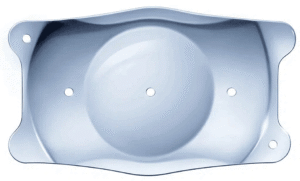
Because the natural lens remains in place, EVO ICL is known as a phakic intraocular lens. It may appeal to patients with higher levels of myopia, thinner corneas, or dry eye concerns that make corneal laser treatment less suitable.
Patients may receive:
- EVO ICL for nearsightedness
- Toric EVO ICL for nearsightedness with astigmatism
Detailed measurements determine whether the eye has sufficient internal space for safe placement and which lens power and size are appropriate.
Why the Decision Changes After 40
Beginning in the 40s, the natural lens becomes less flexible. This age-related change, called presbyopia, makes focusing on phones, books, menus, and other nearby objects more difficult.
EVO ICL can correct eligible distance blur caused by myopia and astigmatism, but it does not restore the natural lens’s ability to focus up close. A patient who currently removes distance glasses to read may therefore need reading glasses after both eyes are corrected for distance.
The natural lens also deserves closer evaluation because early cataract changes become more likely with age. EVO ICL preserves that lens, while refractive lens exchange removes it.
A consultation after 40 should answer two separate questions:
- Can EVO ICL safely correct your distance prescription?
- Does preserving your natural lens support your long-term vision goals?
Who May Qualify for EVO ICL After 40?
EVO ICL after 40 may deserve consideration when you:
- Have nearsightedness with or without astigmatism
- Have a stable prescription
- Have a clear, healthy, natural lens
- Have adequate internal eye space for lens placement
- Meet corneal endothelial cell requirements
- Want to preserve corneal tissue
- Have thin corneas or dry eye concerns
- Understand that reading glasses may still be necessary
- Have realistic expectations about future age-related vision changes
The evaluation must also consider anterior chamber depth, drainage angle anatomy, intraocular pressure, corneal cell health, glaucoma risk, retinal health, and other clinical factors. The FDA’s age expansion did not eliminate those anatomical and medical requirements.
Patients previously told they do not qualify for LASIK can learn about vision correction options beyond LASIK before their consultation.
What EVO ICL Does Not Treat
EVO ICL treats eligible myopia and myopic astigmatism. It does not directly correct:
- Presbyopia
- Cataracts
- Retinal disease
- Glaucoma-related vision loss
- Corneal scarring
- Macular degeneration
- Vision changes caused by an unstable medical condition
You may still need readers, progressive lenses, or computer glasses. That does not mean the procedure failed. Distance correction and age-related near focusing are separate vision needs.
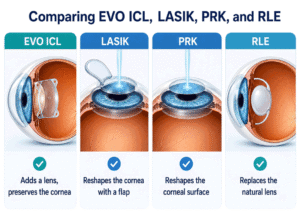
Comparing EVO ICL, LASIK, PRK, and RLE
The best procedure depends on your prescription, corneas, natural lens, eye anatomy, and preferred range of vision.
| Procedure | What It Changes | When It May Be Considered |
|---|---|---|
| LASIK | Reshapes the cornea beneath a flap | The cornea is healthy and thick enough for laser correction |
| PRK | Reshapes the corneal surface without a flap | A surface procedure is preferred |
| EVO ICL | Adds a lens while preserving the cornea and natural lens | Myopia, higher prescriptions, thin corneas, or dry eye concerns are present |
| Refractive lens exchange | Replaces the natural lens with an artificial lens | Presbyopia or natural-lens changes influence the vision problem |
LASIK eye surgery may remain an excellent option for patients with suitable prescriptions and healthy corneas. PRK vision correction offers a flap-free corneal alternative.
EVO ICL preserves both the cornea and natural lens. Refractive lens exchange takes a different approach by replacing the natural lens, which may better fit some patients with significant presbyopia or early lens changes.
EVO ICL or Refractive Lens Exchange After 40?
This comparison becomes especially important in the late 40s and 50s.
EVO ICL may remain attractive when the natural lens is clear, and the main concern is moderate or high nearsightedness. Refractive lens exchange may deserve greater consideration when near-vision loss, farsightedness, or early cataract changes have become central to the patient’s visual frustration.
Your surgeon will consider:
- Natural-lens clarity
- Current reading glasses use
- Prescription and astigmatism
- Corneal and retinal health
- Night-driving needs
- Preferred vision range
- Tolerance for glasses
- Long-term likelihood of needing lens surgery
A patient with high myopia and a clear natural lens may receive a different recommendation than someone of the same age with early cataracts and significant presbyopia.
What Happens During the Consultation?
A free vision correction consultation may include:
- Prescription testing
- Corneal shape and thickness measurements
- Tear-film evaluation
- Pupil measurement
- Anterior chamber and drainage-angle assessment
- Corneal endothelial cell testing
- Eye-pressure measurement
- Dilated examination of the natural lens and retina
- A discussion of reading, driving, work, and lifestyle priorities
This examination helps determine whether EVO ICL, LASIK, PRK, refractive lens exchange, or continued use of glasses or contacts offers the most appropriate path.
Surgery, Recovery, and Tradeoffs
During EVO ICL surgery, the surgeon inserts the folded lens through a small opening and positions it behind the iris. The outpatient procedure uses numbing medication, and patients need transportation home afterward.
Follow-up visits allow the care team to monitor eye pressure, lens position, healing, and vision. Recovery varies, so patients should wait for their surgeon’s approval before driving, exercising intensely, rubbing their eyes, or changing prescribed medication.
Potential risks include elevated intraocular pressure, inflammation, glare, halos, cataract formation, corneal endothelial cell loss, infection, lens position concerns, and the possibility of needing glasses or additional treatment. Your surgeon will explain how these considerations apply to your eyes.
Compare Your Vision Correction Options
EVO ICL after 40 can be a valuable choice for selected adults with nearsightedness, healthy natural lenses, suitable eye anatomy, and realistic expectations about near vision.
Barnet Dulaney Perkins Eye Center compares EVO ICL with LASIK, PRK, refractive lens exchange, glasses, and contact lenses to ensure the recommendation fits both your current prescription and future vision needs. Request a free vision correction consultation to explore your options..