
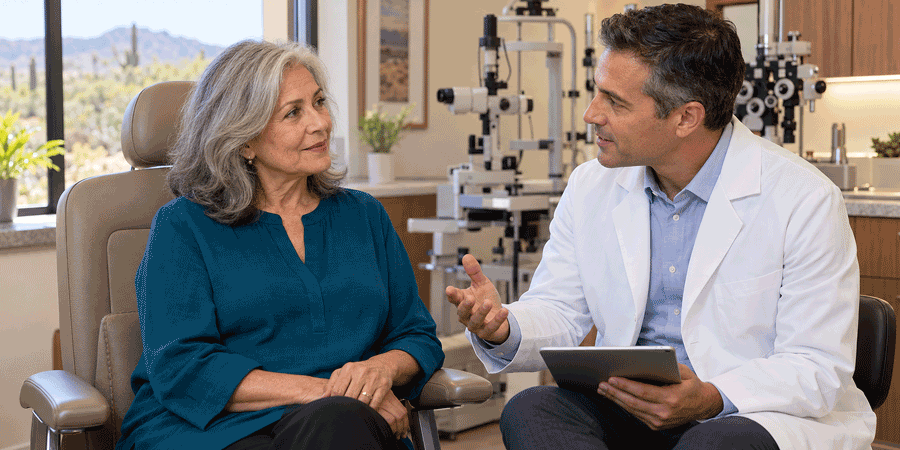
Cataract surgery with glaucoma is often possible and can help improve vision affected by a cloudy lens while continuing to manage your glaucoma. Your eye doctor will assess how each affects your eyes and whether to treat them together or separately.
At Barnet Dulaney Perkins Eye Center, our cataract surgeons and glaucoma specialists work closely together to develop personalized treatment plans for patients with both conditions. By considering your overall eye health, our doctors can help determine when cataract surgery with glaucoma is a safe and appropriate option, with the goal of improving your vision while protecting your long-term eye health. Schedule an eye exam or cataract evaluation to explore your options.
Cataracts and Glaucoma Affect Vision Differently
Cataracts cloud the natural lens inside your eye. They can cause blurry vision, glare, faded colors, and difficulty driving at night. Cataract surgery replaces the cloudy lens with a clear artificial lens.
Glaucoma damages the optic nerve, which carries visual information to your brain. Open-angle glaucoma often develops without noticeable symptoms and can gradually affect side vision. Treatment focuses on lowering eye pressure to help prevent further damage.
Both conditions become more common with age and can occur in the same eye. Cataract surgery cannot restore sight already lost to glaucoma.
Planning Cataract Surgery With Glaucoma
Your symptoms, eye health, and glaucoma control guide treatment. Tell your doctor if reading, driving, or recognizing faces has become harder.
Your evaluation may include a review of:
- Your glaucoma type and stage
- Current eye pressure and the pressure your doctor aims to achieve
- Optic nerve imaging and visual field test results
- Current medications and previous eye procedures
Your surgeon will discuss cataract lens options. Certain lens designs can reduce contrast or cause glare, making them less suitable for some glaucoma patients. The choice should reflect your eye health and daily activities.
As you prepare for cataract surgery, share your medication list and previous eye surgery details with your team.
Treatment Options for Both Conditions
The Glaucoma Research Foundation explains that treatment may involve cataract surgery alone, combined surgery, or separate procedures.
Cataract Surgery Alone
If glaucoma is stable, a cataract surgeon may recommend removing the cataract while continuing glaucoma care with medication or laser treatment, such as selective laser trabeculoplasty (SLT).
If the cataract is not significantly affecting daily activities, your doctor may recommend monitoring it while treating the glaucoma.
Combined Cataract and Glaucoma Surgery
Some patients may benefit from glaucoma treatment during cataract surgery. This approach addresses the cloudy lens and eye pressure during the same operation.
Minimally invasive glaucoma surgery (MIGS) includes procedures that improve fluid drainage to lower pressure. Surgeons may combine MIGS and cataract surgery for selected patients, often those with mild to moderate open-angle glaucoma.
Some patients need a greater reduction in pressure than MIGS can provide. Your surgeon may recommend a different glaucoma operation or separate procedures based on your treatment goals.
Combined treatment may reduce the need for glaucoma drops, although you may still need medication. Your surgeon will explain the benefits, risks, and alternatives for your eyes.
Recovery and Continued Glaucoma Care
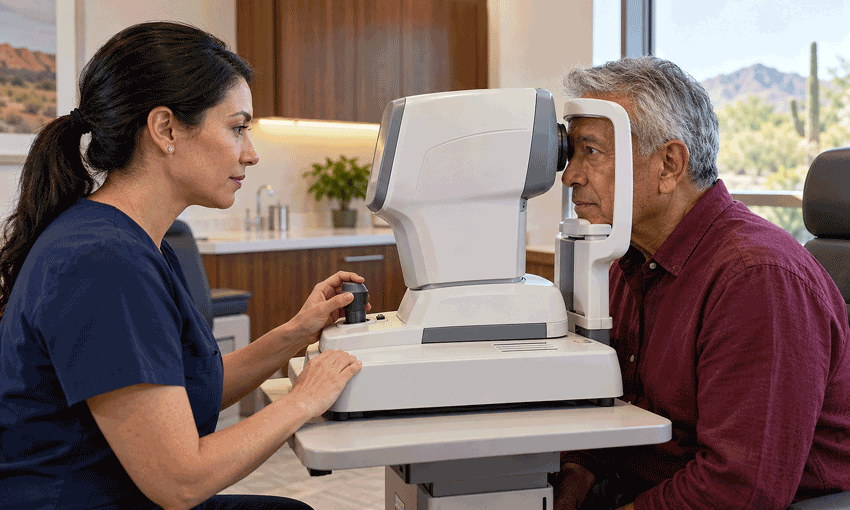
Cataract surgery for glaucoma patients requires attention to eye pressure during recovery. Your doctor will likely pay particular attention to your eye pressure during follow-up appointments, as temporary pressure increases can occur after surgery. Follow your care team’s instructions for continued use of glaucoma medications, healing drops, and activities.
Recovery depends on the procedures performed and your eye health. Ask when you can return to driving, exercise, and work. Long-term eye pressure monitoring remains important after your eye heals.
Seek immediate medical care for sudden vision loss or severe eye pain. After surgery, contact your surgical team promptly if you experience worsening vision or increased redness, as the National Eye Institute’s aftercare guidance advises.
Get a Plan for Both Conditions
Whether you’ve recently been diagnosed with cataracts or have been managing glaucoma for years, understanding your options is an important first step.
At Barnet Dulaney Perkins Eye Center, our team provides personalized care to patients throughout Phoenix, Scottsdale, Mesa, Tucson, and communities across Arizona. Schedule a cataract evaluation today to learn whether surgery is right for your eyes and what treatment options may be available.