
☑️ Personalized recommendation
☑️ Multiple Arizona locations
☑️ Insurance guidance
Choose a lens for the way you want to see the world. Cataract surgery replaces your cloudy natural lens with a clear artificial lens. Your eye health, daily activities, and vision goals help determine which option may best fit you.
☑️ Personalized recommendation
☑️ Multiple Arizona locations
☑️ Insurance guidance
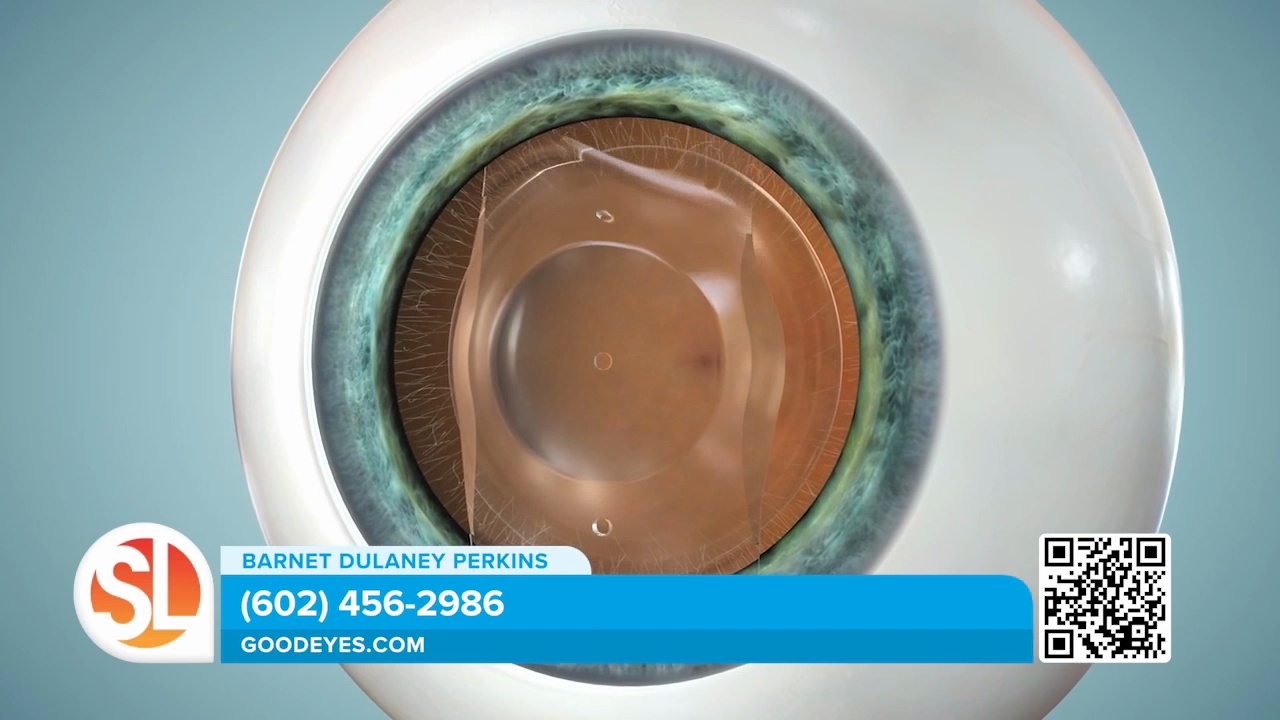
To fix cataracts, eye doctors have to remove the natural lens of your eyes and replace it with an artificial one, called an intraocular lens (IOL). An IOL can be made from silicone, acrylic, or other plastics. These lenses provide clear vision and are often coated in a special material to protect you from the sun’s ultraviolet rays.
There are a variety of IOLs available for cataract surgery. Some are designed to provide vision at different distances, while others help fix vision problems like astigmatism. The best option for one patient may not be the best for another, so it’s essential to carefully consider your options.
If you typically spend your time doing either near or distance tasks, or you don’t mind wearing glasses, monofocal lenses can be a good option. But if glasses are inconvenient to you or you frequently switch between near and distance viewing, you may want to consider a presbyopia-correcting option.
Presbyopia-correcting lenses, especially multifocal or EDOF lenses, are more likely to cause halos and rings around lights. If you drive a lot at night, it’s a good idea to avoid these types of lenses.
If you don’t have astigmatism or a very mild form, paying extra for toric lenses may not be worth it. However, those with moderate to high astigmatism may benefit significantly from these lenses.
Cost is one factor to consider, but it should be weighed alongside your vision goals, eye health, and expectations.
Multifocal and EDOF lenses are not a good option for those with certain eye conditions, such as glaucoma or macular degeneration. These lenses reduce the amount of light to the eye, which can make vision worse.
If you’re still not sure which option is right for you, the experts at Barnet Dulaney Perkins can help. We use a state-of-the-art device, called an Optiwave Refractive Analyzer (ORA), to get real-time, highly accurate measurements during surgery and determine which lens option will offer you the best possible vision.
If you typically spend your time doing either near or distance tasks, or you don’t mind wearing glasses, monofocal lenses can be a good option. But if glasses are inconvenient to you or you frequently switch between near and distance viewing, you may want to consider a presbyopia-correcting option.
Presbyopia-correcting lenses, especially multifocal or EDOF lenses, are more likely to cause halos and rings around lights. If you drive a lot at night, it’s a good idea to avoid these types of lenses.
If you don’t have astigmatism or a very mild form, paying extra for toric lenses may not be worth it. However, those with moderate to high astigmatism may benefit significantly from these lenses.
Cost is one factor to consider, but it should be weighed alongside your vision goals, eye health, and expectations.
Multifocal and EDOF lenses are not a good option for those with certain eye conditions, such as glaucoma or macular degeneration. These lenses reduce the amount of light to the eye, which can make vision worse.
If you’re still not sure which option is right for you, the experts at Barnet Dulaney Perkins can help. We use a state-of-the-art device, called an Optiwave Refractive Analyzer (ORA), to get real-time, highly accurate measurements during surgery and determine which lens option will offer you the best possible vision.
No single lens is best for everyone. Your surgeon considers your eye health, measurements, daily activities, and budget. At Barnet Dulaney Perkins Eye Center, a cataract evaluation helps you compare options based on your priorities, including reading, computer work, and night driving.
You may still need glasses, regardless of which lens you choose. Monofocal lenses focus at one distance, so choosing distance vision usually means wearing reading glasses. Other lens designs can reduce your dependence on glasses, but none guarantees glasses-free vision for every task. The American Academy of Ophthalmology explains these differences in lenses.
Multifocal lenses provide more than one focus. Trifocal lenses include distance, intermediate, and near focus. Extended depth-of-focus, or EDOF, lenses extend the range of focus, generally emphasizing distance and intermediate vision. Near vision varies by design, and reading glasses may still be necessary. Each option has tradeoffs involving visual range, contrast, and halos.
Yes. Toric lenses can correct corneal astigmatism during cataract surgery. “Toric” describes the astigmatism-correcting feature, not the number of focusing distances. Some monofocal and presbyopia-correcting lenses have toric versions. Your surgeon measures your cornea to determine whether this correction would help.
The Light Adjustable Lens allows your doctor to refine its focusing power after surgery through a series of office-based light treatments. It requires additional appointments and special UV-protective glasses during the adjustment period. Follow your care team’s instructions, including when you can stop wearing the glasses. RxSight’s patient guidance explains these requirements.
Tell your surgeon that night driving is a priority. Monofocal lenses may suit patients who prioritize contrast and fewer visual disturbances. Multifocal and some EDOF designs can produce halos or glare, although experiences vary. The American Academy of Ophthalmology includes night driving as one of the factors to consider when choosing a lens.
Possibly, but your diagnosis and the extent of any vision damage matter. Some lens designs may be unsuitable when an eye condition already affects contrast or central vision. Your surgeon will explain which options offer realistic benefits without adding unnecessary visual tradeoffs.
Medicare and many insurance plans cover a conventional monofocal lens as part of covered cataract surgery. Deductibles and other out-of-pocket costs may still apply. Choosing additional vision-correction features can involve charges that your plan does not cover. Review Medicare’s cataract surgery coverage and request an itemized estimate showing covered services and optional upgrades.

Cataract surgery can immensely improve your vision, but it is important to choose the right lenses for your needs. Barnet Dulaney Perkins has provided state-of-the-art medical and surgical eye care in Arizona for over 30 years. Contact us today to learn how we can help you choose the right cataract surgery lenses and clarify your vision.