

Eyelid cancer may account for just 5–10% of all skin cancers, but the eyelid’s ultra-thin, UV-exposed skin makes it particularly vulnerable. Even a tiny bump or persistent redness can signal trouble. This guide will cover what causes eyelid cancer, how to spot early warning signs, diagnostic steps, treatment options, and proven ways to protect your eyelids from harmful rays.
What Is Eyelid Cancer?

Eyelid cancer arises when abnormal cells grow in the skin or glands of the eyelid. Though most common types include:
- Basal cell carcinoma: The rarest eyelid cancer, but still the leading skin-cancer type overall.
- Squamous cell carcinoma: Often appears as a scaly patch or a persistent sore.
- Melanoma: An aggressive form that can develop from a dark mole on the eyelid.
Accounting for up to one in ten skin cancers, eyelid cancer demands vigilance, even if it starts as what seems like a harmless bump.
Causes & Risk Factors

- Ultraviolet (UV) exposure: Chronic sun damage on the thin eyelid skin is the chief culprit.
- Fair skin & light eyes: Less natural melanin means less protection against UV rays.
- History of sunburns or tanning-bed use in the eyelid area.
- Age & genetics: Risk rises after 60 and with a family history of skin cancer.
Protective measures—like wide-brimmed hats and SPF eyelid creams—are your best defense.
Signs & Symptoms of Eyelid Cancer
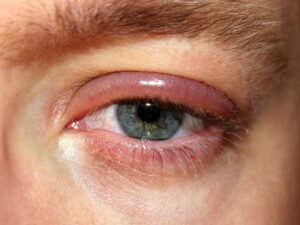
Watch closely for these red flags on your eyelids:
- A lump or bump that doesn’t resolve (often mistaken for a stye)
- Persistent redness or eyelid inflammation
- Irregular lesions—especially ones that scab, bleed, or crust
- Sudden loss of eyelashes in a localized area
- Vision changes if the lesion presses on your eye
If any sign persists for more than 2 weeks, schedule a skin evaluation—early detection of eyelid cancer vastly improves outcomes.
How Eyelid Cancer Is Diagnosed
- Comprehensive exam: An oculoplastic or dermatologic specialist inspects your eyelids and surrounding skin.
- Imaging, if needed: High-resolution photographs or confocal microscopy help map lesion borders.
- Biopsy:
- Shave biopsy for superficial lesions
- Excisional biopsy for deeper or suspicious growths
Treatment Options
- Mohs micrographic surgery: Tissue-sparing technique with the highest cure rates for basal and squamous types.
- Standard excision: Surgical removal with margin assessment, often paired with reconstructive eyelid repair.
- Radiation therapy: An alternative for patients who can’t undergo surgery.
- Reconstructive procedures: Oculoplastic surgeons restore both function and appearance.
Clinical studies in JAMA Ophthalmology report Mohs success rates above 95% for eyelid tumors.
Prevention & Protection

- Wear UV-blocking sunglasses and a broad-brimmed hat outdoors.
- Apply broad-spectrum sunscreen (SPF 30+) to your eyelid skin daily.
- Perform regular self-checks for new bumps, lesions, or lash loss.
- Avoid tanning beds and excessive midday sun exposure.
Early vigilance is the best prevention—ask your dermatologist for personalized sun-safe strategies.
Frequently Asked Questions: Eyelid Cancer
Is eyelid cancer common?
Eyelid cancer accounts for roughly 5–10% of all skin cancers. While that makes it less common than other skin cancers overall, the eyelid is especially vulnerable because the skin is thin and frequently exposed to UV light. Even small lesions deserve attention.
What does eyelid cancer look like in the early stages?
Early eyelid cancer often appears as a small bump, pearly nodule, scaly patch, or sore that does not heal. It may resemble a stye, but it lingers beyond two weeks. Some lesions may crust, bleed, or cause localized eyelash loss.
How can I tell the difference between a stye and eyelid cancer?
A stye typically resolves within one to two weeks and is often tender. Eyelid cancer lesions usually persist, may not be painful, and can gradually change in size, shape, or texture. If a “stye” does not improve with time or treatment, it should be evaluated.
Who is most at risk for eyelid cancer?
Individuals over age 60, those with fair skin or light eyes, and anyone with a history of significant sun exposure or tanning bed use face a higher risk. A personal or family history of skin cancer also increases susceptibility.
Is eyelid cancer life-threatening?
Most eyelid cancers, particularly basal cell carcinoma, grow slowly and are highly treatable when caught early. However, more aggressive types, such as melanoma or advanced squamous cell carcinoma, can spread if left untreated. Early diagnosis significantly improves outcomes.
How is eyelid cancer treated?
Treatment depends on the cancer type and stage. Mohs micrographic surgery offers the highest cure rates while preserving healthy tissue. In some cases, standard excision, radiation therapy, or reconstructive procedures may be recommended to restore eyelid function and appearance.
Will surgery affect my vision or appearance?
When performed by experienced oculoplastic surgeons, eyelid cancer surgery is carefully planned to preserve vision and maintain natural eyelid function. Reconstructive techniques help achieve both functional and cosmetic balance.
How can I reduce my risk of developing eyelid cancer?
Daily sun protection is key. Wear UV-blocking sunglasses, apply broad-spectrum SPF 30+ sunscreen to the eyelid area, and use wide-brimmed hats outdoors. Avoid tanning beds and perform regular self-checks for any new or changing lesions.
Protect Your Vision
This type of cancer may be rare, but its delicate location demands prompt action. You safeguard your vision and appearance by recognizing early warning signs and seeking expert care.
Schedule your comprehensive eyelid skin exam at Barnet Dulaney Perkins today to catch eyelid cancer before it spreads.