How to Prepare for Cataract Surgery: What You Need to Know
Understanding how to prepare for cataract surgery starts with knowing what causes cataracts. The most common cause of cataracts is the natural aging process. As we age, the lens of the eye can gradually lose clarity and become cloudy, leading to a decline in vision quality. When this clouding begins to impact your daily life, it may be time to consider cataract surgery, allowing you to move forward with confidence and a clear plan.
What to Expect During Your Cataract Evaluation
During your cataract evaluation, an eye doctor will examine your eyes to assess overall health and confirm the presence of cataracts. You’ll likely meet with a patient care counselor if cataracts are diagnosed. They will explain how to prepare for cataract surgery, what to expect on the day of surgery, and outline the recovery process.
What Happens During Cataract Surgery?
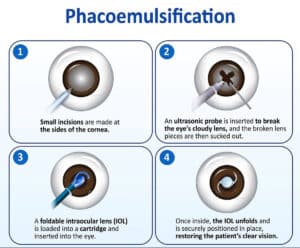
Cataract surgery is the only way to remove a cataract. The procedure involves creating a tiny opening to remove the clouded natural lens of your eye. A clear, artificial lens (intraocular lens, or IOL) is inserted in its place.
Modern cataract surgery utilizes advanced technology, such as phacoemulsification, which enables the removal of the cloudy lens through a small, self-sealing incision. Your surgeon will help you decide whether a standard monofocal lens or an advanced technology lens is the best fit for your lifestyle.
How to Prepare for Cataract Surgery: Lens Choices
Earlier lens options provided only one focal point (typically distance vision), necessitating the use of reading glasses after surgery. Today’s advanced lenses can reduce or eliminate the need for glasses by offering multiple focal points. Not everyone is a suitable candidate for these lenses, so your doctor will conduct additional testing to determine if they are right for you.
Insurance Coverage for Cataract Surgery
Most insurance plans cover cataract surgery with a standard monofocal lens. If you choose advanced lenses or premium vision packages, these are usually not covered. Make sure to ask about costs, coverage, and payment options during your consultation so you can prepare financially.
Timeline
One Week Before Surgery
About a week prior, you’ll visit your eye doctor for painless measurements and tests to select the best lens implant. This is a good time to:
Schedule your follow-up visits.
Arrange for a friend or family member to drive you home on the day of your surgery.
Plan for help with household tasks, especially if you live alone.
The Night Before
Your provider may give you eye drops or medication to use the night before surgery. Follow these instructions carefully. Additional tips on how to prepare for cataract surgery the night before include:
Avoid alcohol.
Inform your doctor about all medications you take, as some may require adjustment.
Do not eat or drink after midnight unless instructed otherwise.
Get a good night’s sleep and reach out to your provider if you feel anxious.
The Day of Surgery
On surgery day:
Do not eat or drink anything.
Wear comfortable clothing and refrain from wearing makeup, perfume, cologne, or lotions.
Arrive at the surgical center early to handle paperwork and ask final questions.
Your ride home should wait until you finish, so you won’t have to arrange transportation afterward. The procedure itself is quick, and most patients are discharged within two hours.
Ready to Take the Next Step?
At Barnet Dulaney Perkins Eye Center, we make it easy for patients to understand how to prepare for cataract surgery. Our team is here to guide you at every stage, from evaluation to recovery. If you have questions or are ready to schedule your cataract consultation, contact us today.
Recent Posts
Manage Cookie Consent
To provide the best experiences, we use technologies like cookies to store and/or access device information. Consenting to these technologies will allow us to process data such as browsing behavior or unique IDs on this site. Not consenting or withdrawing consent, may adversely affect certain features and functions.
Functional
Always active
The technical storage or access is strictly necessary for the legitimate purpose of enabling the use of a specific service explicitly requested by the subscriber or user, or for the sole purpose of carrying out the transmission of a communication over an electronic communications network.
Preferences
The technical storage or access is necessary for the legitimate purpose of storing preferences that are not requested by the subscriber or user.
Statistics
The technical storage or access that is used exclusively for statistical purposes.The technical storage or access that is used exclusively for anonymous statistical purposes. Without a subpoena, voluntary compliance on the part of your Internet Service Provider, or additional records from a third party, information stored or retrieved for this purpose alone cannot usually be used to identify you.
Marketing
The technical storage or access is required to create user profiles to send advertising, or to track the user on a website or across several websites for similar marketing purposes.